Get Full Government Meeting Transcripts, Videos, & Alerts Forever!
Get email alerts on the Board Procedure topic
No spam. Unsubscribe anytime.
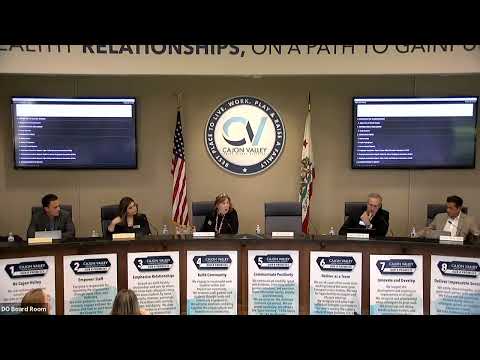
Cajon Valley board meeting stalls after dispute over absent trustee’s remote participation
Summary
Trustees disputed whether Trustee Lily Schwar could attend remotely; disagreements over counsel advice and posting timelines led the board to fail to adopt the agenda and then adjourn, while staff warned some agreements would need later ratification.
A Cajon Valley Union School District board meeting failed to adopt the agenda and was adjourned after trustees disputed whether Trustee Lily Schwar should have been allowed to participate remotely.
A trustee speaking at the meeting said the superintendent had denied a board member’s request to call into the meeting despite timely notice and called the action “an obvious attempt to tamper with board votes.” The trustee added: “A superintendent cannot generally deny a board member's request to call into a board meeting.”
The superintendent responded that he had taken multiple steps to enable remote participation but relayed legal advice raising a procedural problem: counsel told trustees the district risked violating the 72-hour posting requirement if a public meeting location could not be posted in advance, and that posting while the trustee was in Mexico posed access concerns. “The main thrust of his advice was the problem with not posting within 72 hours,” the superintendent said, describing efforts to post a revised printed agenda and asking whether that would suffice.
Trustees debated whether to proceed without Trustee Schwar or adjourn so she could participate. One trustee argued that adjourning would disenfranchise members of the public and displace people who came for the short agenda; another said staff had a duty to ensure trustees could attend and that prior meetings had accommodated remote participation under an AB 2449 exception.
District staff warned that several items on the agenda were time-sensitive. Staff said four interagency agreements (ICAs) would need ratification if not approved at a later meeting, a classification and compensation study could not start by May 1 if delayed, and several bids and claim-rejection timelines were constrained. Staff recommended adopting the agenda and moving forward to avoid later administrative and fiscal complications.
After discussion, a motion to adopt the agenda (moved by Jim) failed. A motion to adjourn was then made and seconded; the meeting was adjourned. The record does not include a detailed roll-call tally or a formal written opinion from counsel in the transcript.
The board’s next procedural steps were not specified in the transcript; staff indicated the time-sensitive ICAs and bids would be carried to the next meeting for ratification if necessary.