Get Full Government Meeting Transcripts, Videos, & Alerts Forever!
Get email alerts on the Infrastructure topic
No spam. Unsubscribe anytime.
Glenwood Springs tightens project schedule and hires bridge construction manager as council presses on cost and readiness
Summary
City staff rolled out schedules for major streets and trails and presented a master services agreement for Southbridge construction management; council approved onboarding a CM firm while debating whether plans are bid‑ready and how high the ultimate price could go.
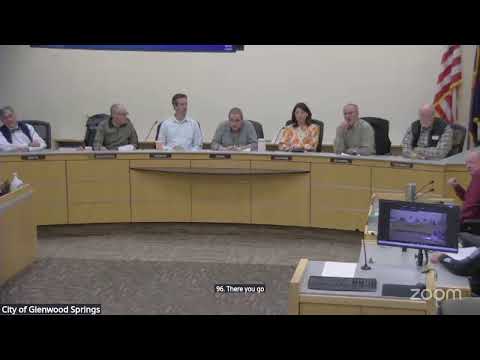
City engineers updated the Glenwood Springs City Council on an array of capital projects on March 5 and asked the council to authorize a construction-manager contract tied to the Southbridge corridor project.
Ryan Gordon, city engineer, summarized near-term schedules: the Highway 6 and 24 shared-use path is set to begin March 16; Coach Miller Drive construction is scheduled to start in early June; 19th Street will include sewer upsizing and sidewalk replacements; and a soccerfield-road sidewalk will be timed for the school break. Gordon said the city is also pursuing grants for several projects and finalizing designs.
On the larger Southbridge project — the city’s multiagency highway/bridge program — staff presented a master services agreement with Rocksol for preconstruction and construction-management services. “The way that I plan on executing this contract... is for all activities that they want to do is really get defined scope from them even further than this and then really understand if we need to do the work or not,” Gordon said, framing the CM role as a quality-control and cost-validation step.
Why it matters: The Southbridge project is tied to federal grant obligations and right-of-way acquisition; staff said meeting FHWA obligation milestones depends on finalized drawings, environmental documents and secured right-of-way. Councilors repeatedly questioned whether the plans were truly bid-ready and worried about underground utility risks and cost contingencies. Staff estimated the current refined cost range in the tens of millions; in discussion they cited a rough range near $70–75 million while acknowledging prior higher estimates.
Council debate and vote: Skeptical councilors said committing project money without a full funding package felt premature; proponents stressed Rocksol’s experience with large-scale projects would reduce risk and help finalize bids. Council approved the master services agreement after debate (motion and second; vote passed 5–2).
Ending: Staff will continue to refine plans, finalize environmental re-evaluation materials, pursue right‑of‑way offers already made to property owners and return with bid-ready documents and cost validation from the CM team to inform later funding decisions and potential financing options.