Get Full Government Meeting Transcripts, Videos, & Alerts Forever!
Get email alerts on the Housing topic
No spam. Unsubscribe anytime.
Glenwood Springs council backs state down-payment grant application amid debate over program design
Summary
Council voted 5–2 to support a state down-payment assistance grant application intended to preserve and expand locally targeted homeownership opportunities. Supporters called the program development-neutral and neighborhood-integrative; skeptics warned about moral hazard, underwriting and long-term program costs.
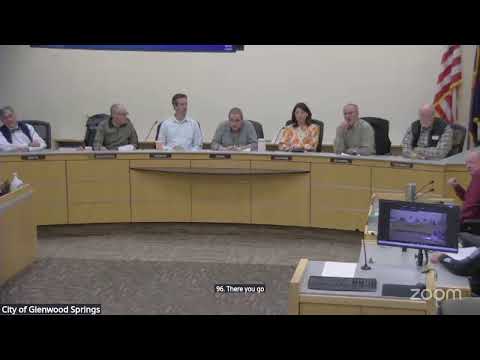
The Glenwood Springs City Council approved a resolution on March 5 supporting an application to the Colorado Division of Housing for another round of down-payment assistance grant funding.
Watkins, the city’s housing development manager, told the council the existing program — funded by an earlier grant — has been successful but the funds are nearly depleted; staff asked for approval to apply for another round of state funding with an April 1 deadline. “We’ve had a down payment assistance program in the city since 2025... the money is almost spent down,” Watkins said during the presentation.
Why it matters: Supporters argued the program promotes ownership in diverse neighborhoods without explicitly subsidizing particular developers or projects. Councilor Townsley and others described the program as “development neutral” and a tool to integrate ownership across the community.
Council debate: Questions centered on grant conditions, reporting requirements, eligibility rules and whether the state’s conditions would limit local choices. Several councilors pressed staff on whether the state program requires matching funds (staff said no for the current grant), whether program income could be used in a revolving-loan model (staff: the state program provides grants and has program-income rules, whereas the city could use local funds differently), and how the city’s Prop 123 baseline commitment factors into state-mandated percentages for affordable housing targets.
Skeptics, including one council member, warned that low personal-investment thresholds (staff noted minimum contributions and debt-to-income underwriting) and large grant amounts could create moral-hazard risks and complicate long-term program administration. Staff said the program includes underwriting thresholds (minimum borrower contribution, debt-to-income limits) and that the state program’s rules would govern the grants.
The council voted to approve the resolution supporting the grant application (motion, second, passed 5–2). Watkins said staff will proceed with the application and provide additional details and follow-up reporting on program rules and projected units served.
Ending: Councilors asked staff for later updates with exact unit projections linked to projects in the pipeline. No funds were appropriated on the motion; the vote authorized pursuing the state grant application.