Get Full Government Meeting Transcripts, Videos, & Alerts Forever!
Get email alerts on the Immigration Detention topic
No spam. Unsubscribe anytime.
Residents demand public review after reporting that a hold room at 100 Midland operated without proper occupancy and shared data with immigration enforcement
Summary
Multiple residents told the Glenwood Springs City Council they uncovered an unpermitted immigration hold room at 100 Midland Avenue and alleged the city participated in data-sharing through the SPEAR task force; speakers asked for full transparency and a public hearing after staff disclosed long-standing code issues at the site.
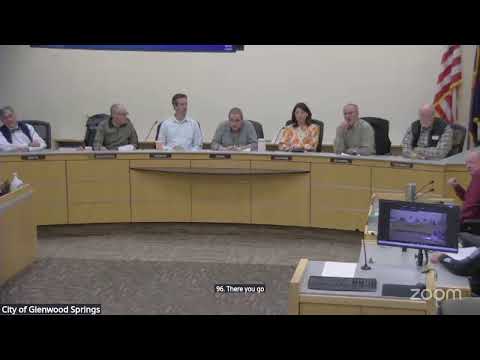
Several residents urged Glenwood Springs leaders on March 5 to open a public hearing after investigative reporting and a city inspection revealed a detention-style hold space at 100 Midland Avenue.
At the meeting, Ashley Stall, who identified herself as a Glenwood Springs homeowner, said the Colorado Times published federal data showing 83 people detained at the 100 Midland address between January and October of last year and that city inspectors found multiple safety violations after she raised the issue. “This conduct appears not only unlawful but contrary to the values and vision of our community,” Stall said, arguing the building had been used without a valid certificate of occupancy for two decades and that inspectors identified non-functioning exit and emergency lighting, untested 20‑year‑old sprinklers and no evacuation procedures.
Why it matters: Residents said the location sits close to other community services — including a Social Security office — and that surveillance systems and license-plate readers may have been used by federal immigration authorities. Several speakers linked the city’s participation in information-sharing through a regional task force (referred to as SPEAR in public comment) with enforcement actions that community members said led to arrests and family separations.
In public remarks, Aaron Anderson described alleged incidents where people were taken from courthouse steps or other public locations and later detained, saying those actions have left parents, students and neighbors fearful. He said the pattern has real consequences for schools and families: “Complying with court orders shouldn’t come with the risk of being taken into custody by ICE.”
Other residents pressed similar themes. Zod Woolsey, a software engineer, criticized the city’s vetting of surveillance products and cited prior data-breach reports involving Flock hardware; Don Dexter urged the council to end police involvement in SPEAR “as it relates to ICE,” and Sally Boutton summarized reporting that hold rooms nationally have limited oversight and raised the city’s responsibility to disclose records.
Council response and next steps: Council members repeatedly said their powers are limited — several emphasized the Garfield County Sheriff and federal authorities have jurisdiction over immigration enforcement — while also acknowledging the council’s responsibility to review what the city controls. Council members suggested a more public forum and asked staff to follow up on building-code enforcement, vendor vetting, and legal exposure. Staff confirmed inspectors identified code and life-safety deficiencies at the building after the matter was raised publicly.
The council did not take a formal vote on the matter during the meeting. Several residents asked the council to schedule a dedicated public hearing and to release all records relating to the facility and the city’s interactions with SPEAR and surveillance vendors. The council indicated it would pursue follow-up briefings and consider a public forum to discuss next steps.