Get Full Government Meeting Transcripts, Videos, & Alerts Forever!
Get email alerts on the Radio Upgrade topic
No spam. Unsubscribe anytime.
Sawyer County committee weighs building towers, leasing space or partnering with private provider for radio upgrade
Summary
Committee members heard technical and financial comparisons for a public-safety radio upgrade: options include county-built towers (~$2.5 million), leasing space from existing towers (ongoing annual lease costs), or partnering with a private builder ("Bucktussle"). The discussion emphasized coverage gaps in southeast Sawyer County and next steps to collect lease and construction estimates.
The Sawyer County Public Safety Committee spent the meeting’s longest discussion weighing options to upgrade the county’s public-safety radio system, including building county-owned towers, leasing space on existing towers, or partnering with a private provider referred to in the meeting as "Bucktussle." Chair opened the item as a discussion of alternatives and asked staff to narrow options for finance committee review.
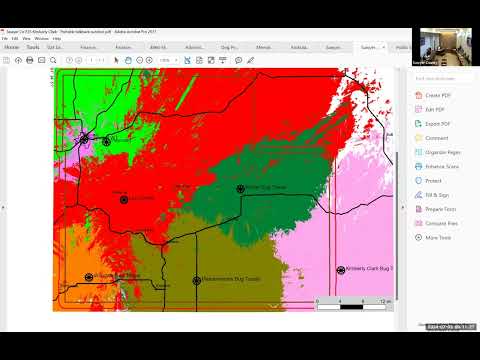
Andy, a county communications lead, told the committee that GenComm had begun talks with WOJB about using that station's tower and had identified other tower sites that have passed county zoning, including a 400-foot tower near Wood Dale and a site near Oxbow. He said GenComm and outside advisors have mapped coverage gaps in the southeast part of the county and flagged two principal approaches: leasing space on existing towers or building new county-owned towers. "If we build towers, it's a $2,500,000 project that we have to service the debt on," Andy said, adding that leased solutions reduce construction outlays but create recurring operating lease costs.
Gary, an outside advisor on the call, said owning key towers is common, noting maintenance costs are typically modest and ownership protects the county from future lease-rate increases. "Having some of the key towers that they own — I always say, is good because you have then you know you don't you're not paying a lease rate, and they can't jack up the price on you in the future," Gary said.
Committee members also discussed a possible partnership with a private build-and-operate proposal. Andy said partnering with the private vendor could reduce the county’s up-front construction burden because the partner would build towers and fiber, but would require the county to extend borrowing capacity to participate in that private financing. Andy described the partner option as dependent on the vendor and Price County moving forward with their borrowing package and emphasized that a notice-of-intent and an authorization resolution would be needed to keep the partner's option open; those documents would not bind the county but would preserve the option through the partner's borrowing timeline.
Members pressed on trade-offs: one member asked whether leasing would accelerate deployment. Andy and Gary said leasing existing, constructed sites could allow faster equipment installation than building new towers. Gary estimated tower construction is a multi-month process with regulatory and engineering steps and typically takes 9–12 months from start to having a working tower, while an existing site with a current building can be brought online more quickly. Andy warned that leased tower space could cost "anywhere from 1,500 to 2,500" (monthly lease rates per site were discussed), and he estimated that leasing multiple tower sites could push annual operating costs into the neighborhood of $100,000, which would be an operating expense inside the county levy rather than debt service outside the levy cap.
The committee also reviewed alternative tower options including using the Connors Lake DNR tower to cover southeast gaps and potential collaboration with Price County on a Kimberly-Clark/Bucktussle site just east of the county line. Andy said GenComm is compiling lease-rate quotes and construction estimates to produce a comparative cost-benefit analysis; he recommended the committee wait for those numbers before taking action. He said the matter is scheduled for Finance and Administration next week in the form of a notice-of-intent and a proposed resolution that would preserve a partnership option through the partner’s borrowing timetable.
Committee members raised community questions they have already heard, including health concerns about radio transmissions near towers. Gary responded directly to those concerns: "There is not a health issue with the low level," he said, explaining the levels involved are in microvolts and not comparable to the very-high-power transmitters that can pose hazards.
The committee did not adopt a formal policy at the meeting. Andy outlined next steps: gather lease quotes and construction bids, prepare a cost-benefit comparison of building versus leasing, continue due diligence on the private partner, and present notice-of-intent/resolution drafts to the Finance and Administration Committee to keep the partnership option open. The committee left the issue on the agenda for follow-up.