Get Full Government Meeting Transcripts, Videos, & Alerts Forever!
Get email alerts on the Academic Freedom Research Integrity topic
No spam. Unsubscribe anytime.
Draft regulations add academic‑freedom and research‑integrity expectations for accreditors, prompting objections about scope and burden
Summary
The draft recognition rules add a definition of academic freedom and a research‑integrity provision; supporters say clarity helps accreditors and faculty, while critics warn a regulatory definition risks federal overreach, statutory limits on curriculum control, and additional burdens for institutions that do research.
The Department of Education's draft recognition rules include a definition of "academic freedom" and a new section on research integrity, wording the department said is intended to give accreditors a consistent rubric when reviewing institutions' policies and complaint handling.
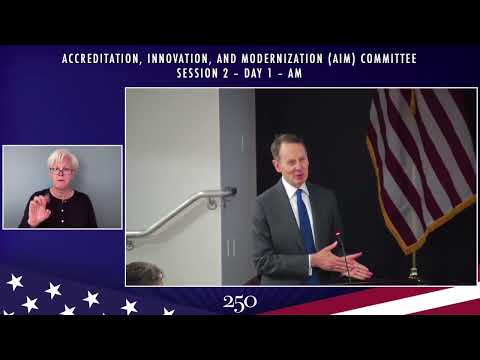
"Our guiding principles come from the president's executive order on reforming accreditation...Within the authority that Congress gave us in the Higher Education Act, our goal is to elevate student success as a focus of accreditation," Assistant Secretary David Barker said in opening remarks. He described the additions — academic freedom and research integrity among them — as clarifying steps to help accreditors check that institutions have and follow appropriate policies. (David Barker)
Some negotiators welcomed a definition that maps to case law and existing academic standards. "We cribbed from that [AAUP]...we liked that because it comports with the case law and because it's a standard that institutions are already aware of," counsel to the department said. (Jake Lalo)
But many negotiators urged caution. "I am very concerned this would be a high priority problem, with the inclusion of a definition of academic freedom and a regulation," a negotiator representing institutional interests said, arguing a federal regulatory definition could constrain institutions' governance and curriculum and run into statutory boundaries on federal control of curricula. (Jennifer Bloom)
On research integrity, negotiators acknowledged misconduct is real but warned the Department must avoid duplicating existing federal research‑security rules and imposing disproportionate compliance costs on institutions without research missions. Several negotiators proposed narrower, "as‑appropriate" language, monitoring reports, or placing research expectations under existing faculty criteria rather than as a new crosscutting criterion.
The committee agreed to schedule caucuses to refine academic‑freedom language, to discuss research‑integrity scope and applicability by institutional mission, and to circulate revised proposals for further discussion.