Get Full Government Meeting Transcripts, Videos, & Alerts Forever!
Get email alerts on the Promotion And Literacy Policy topic
No spam. Unsubscribe anytime.
Board hears plan to align promotion policy with new state literacy rules; DIBELS to be used for K–3 interventions
Summary
District leaders told the board they will update promotion policy to align with a new Maryland literacy policy; the district will use DIBELS as an approved screener and implement individual reading intervention plans ("SHRIPS") for K–3 students not progressing in reading.
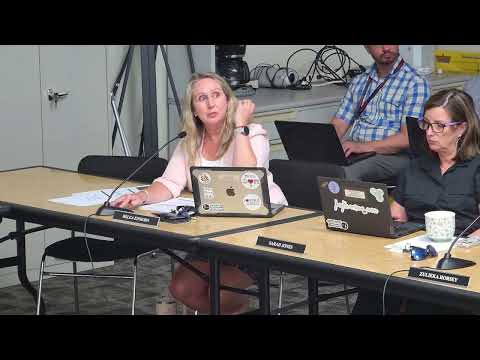
At the meeting the board heard a presentation from Dr. Einhorn on proposed updates to the district's promotion policy (Policy 9.3) to align with newly issued state literacy guidance.
Dr. Einhorn said the district is postponing a formal policy revision until the state finalizes certain regulations and screeners, but that the district plans to use its DIBELS assessment as the approved universal screener for K–3 reading. "Any student who is not progressing in reading on grade level, K to 3, would have an individual student reading intervention plan, which we are calling SHRIPS," she said, describing those plans as collaborative with families and school staff.
Einhorn emphasized that retention at the end of third grade would be contingent on documented interventions, progress monitoring and parent consent, and that there are good-cause exemptions (for example, multilingual learners) so decisions are not made without careful review. She said the district will formalize procedures and required documentation when the policy returns for review and that the changes reflect statewide emphasis on early literacy.
The presentation covered district strategies intended to reduce the need for retention: Multi-Tiered System of Support (MTSS), expanded tutoring (which the presenter said research shows is highly effective), flex periods, new curriculum adoptions, teacher induction and coaching, and requests for targeted staffing increases to expand intervention capacity in high school. Board members asked for additional detail on grading-policy alignment, Edmentum credit recovery mechanics and how many students use Edmentum; Dr. Einhorn said she would provide follow-up figures for course counts and noted Edmentum is state-approved for credit recovery and often used for students who need focused remediation.
The policy revision will be routed to the policy committee for updating; staff said the revised policy and administrative regulations are expected to return to the board in the next month or two for additional discussion.