Get Full Government Meeting Transcripts, Videos, & Alerts Forever!
Get email alerts on the Criminal Offenses topic
No spam. Unsubscribe anytime.
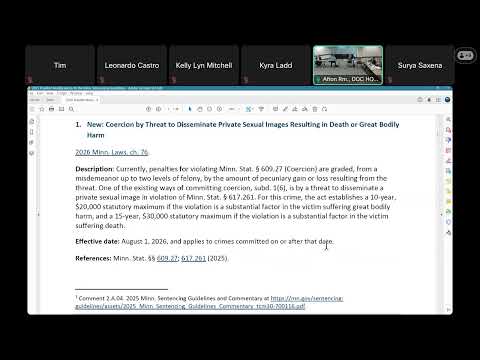
Commission provisionally ranks new coercion‑by‑image and grooming offenses from 2026 session laws
Summary
The Sentencing Guidelines Commission provisionally adopted staff rankings for new coercion offenses tied to threats to disseminate private sexual images and for a new grooming offense and related solicitation extensions; the package was approved in a unanimous preliminary vote and will be posted for public comment ahead of a July hearing.
The Sentencing Guidelines Commission adopted staff recommendations June 4 to provisionally rank new offenses created in the 2026 session laws that involve coercion by threat to disseminate private sexual images and a new sexual‑grooming offense.
Director Wrights summarized the changes, including two newly created felonies tied to threats involving private sexual images: "One is a 10‑year felony if the violation is the substantial factor in the victim suffering great bodily harm and a 15‑year felony if the violation is a substantial factor in the victim suffering death," he explained. Staff recommended ranking the offense resulting in death at severity level 9 and the offense resulting in great bodily harm at level 8.
Staff also described a new grooming offense and two statutory extensions that broaden solicitation‑type crimes to cover (1) older perpetrators in positions of authority over 16–17 year olds and (2) offenses involving enrolled students when the perpetrator is a teacher or contractor. Staff recommended placing the grooming and related solicitation offenses on the sex‑offender grid (severity classification 'G') and proposed consistent offense names to make cross‑references clearer.
Commissioner Eid asked why staff generally refrained from recommending additions to lists that affect permissive consecutive sentences or "severe violent" designations. Director Wrights said staff typically has a status‑quo bias for those lists and invited commissioners to propose changes if they wished. The commission voted to adopt items A1, A3 and A4 (the coercion, grooming/solicitation and hospital‑security assault items) in package form (12–0). These preliminary rankings will be published for at least 30 days and heard at a July public hearing before final action.
Implications: The rankings will guide sentencing policy for cases that involve threats to disseminate private sexual images and for newly crafted grooming‑related offenses; the docketed public hearing is the mechanism for stakeholders to request adjustments before final adoption.
Next steps: Staff will publish the preliminary rankings and materials, and the commission will hear public comment in July before final voting.