Get Full Government Meeting Transcripts, Videos, & Alerts Forever!
Get email alerts on the School Choice topic
No spam. Unsubscribe anytime.
Cohasset school committee declines to opt into state school‑choice program
Summary
After a public hearing and follow-up questions about finances and classroom capacity, the Cohasset School Committee voted May 6 not to opt into Massachusetts' school‑choice program, citing a $5,000 flat reimbursement that would not cover the district's roughly $22,000 per‑pupil cost.
After a focused public hearing on school choice, the Cohasset School Committee voted on May 6 not to opt into Massachusetts’ school‑choice program for the coming year.
Superintendent Sarah Shannon told the committee the state pays a flat $5,000 per incoming student under school choice, while Cohasset’s average per‑pupil expenditure is about $22,000. “There’s a big gap between what we would get for each child who chooses to come here and what we get for our Cohasset resident students,” Dr. Shannon said, warning that the shortfall could leave the district unable to provide the same level of services or retain aligned staffing.
Committee members probed operational details after the presentation. Mr. Dial asked how reimbursement is calculated; Dr. Shannon replied that the payment is a flat state rate. Members also asked whether the district could cap seats by grade and whether selection criteria could consider academic or discipline data; the advisers explained that admissions under school choice are subject to a blind lottery and districts cannot use discretionary criteria when demand exceeds seats.
Committee members raised practical concerns about classroom balance and special education services. One member described a classroom that is heavily skewed by gender and said an influx of choice students could worsen inequities in representation and access to services. Dr. Shannon said the district could set seat caps but would still be required to run a blind lottery if interest exceeded capacity.
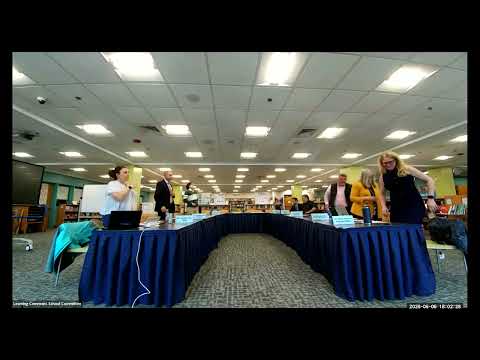
Given the financial gap and limited classroom flexibility after recent staffing alignments, the motion that the district not move forward with school choice carried by committee vote. The committee recorded that no public commenters attended the hearing in person; two participants joined online for the question-and-answer portion but offered no formal comment.
The committee’s decision is procedural and applies to the coming school year; the board may revisit the question if fiscal conditions or policy parameters change.