Get Full Government Meeting Transcripts, Videos, & Alerts Forever!
Get email alerts on the Mental Health topic
No spam. Unsubscribe anytime.
School-based mental health program wins public support; staff describe rapid-response "flight teams"
Summary
County school-based mental health supervisors told the board the program serves about 2,000 students, includes 13 positions across four districts, and that a school-district budget committee insisted school-based mental health be included in next year’s budget after public testimony and concerns about rising elementary suicide screenings.
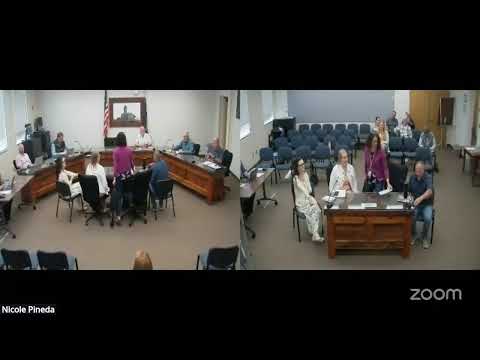
Polk County officials described school-based mental health operations and urgent budget pressure at the Board of Commissioners meeting on June 2.
Hillary Morris, school-based mental health supervisor, said the program currently includes 13 positions serving four districts and about 2,000 students countywide. She told commissioners that a recent Central school-district budget committee meeting featured strong public testimony and that committee members said they would not move forward without school-based mental health programming in next year’s budget. The committee, Morris said, asked for full staffing but said it would accept a smaller package to preserve bilingual staff and supervision if necessary.
Morris described the department’s crisis "flight teams," a rapid-response model that brings multiple trained staff to a school after a traumatic event (for example, a student death by suicide or an arrest of a staff member) to support students, families and school personnel. She said flight teams allow staff who already know students and families to provide immediate, relationship-based support rather than requiring external teams that are unfamiliar with the school community.
Staff raised data and program-evaluation questions: Morris said the county is conducting more suicide screenings in elementary schools than in middle and high schools "almost by double," and that comparative outcome data across counties are limited. Program leaders are exploring Medicaid billing options and other revenue strategies to sustain services if district or state funding changes.
Commissioners and staff framed the issue as both a fiscal and public-safety concern. No formal county budget commitment was made at the meeting; staff said they will track school-district budget developments and state-level funding that affects the program.
The board received the update; the program’s future funding will depend on school-district budget decisions and state policy choices.