Get Full Government Meeting Transcripts, Videos, & Alerts Forever!
Get email alerts on the Emergency Management topic
No spam. Unsubscribe anytime.
Committee told Troutdale's emergency operations plan is a staff document; members push for community trainings
Summary
At the June 4 meeting the committee was briefed on the city's emergency operations plan and urged the city to expand public-facing preparedness through trainings, neighborhood teams and partnerships with county and Red Cross resources. The presenter warned the city lacks capacity to respond to a major disaster alone.
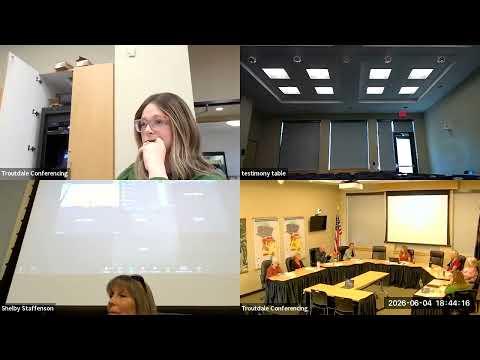
Erica Palmer told the Public Safety and Equity Advisory Committee on June 4 that Troutdale’s emergency operations plan (EOP), adopted last year, is primarily an internal, staff-focused document that lays out roles, responsibilities and mutual-aid agreements with neighboring jurisdictions.
"This plan is really an internal document for the city," Palmer said, noting the EOP follows FEMA’s format and includes intergovernmental agreements. She added, "Don't count on the city. We're we're too small. We don't have the staff or the resources," and said residents should be prepared to rely on county and regional partners after a large-scale event.
The committee pressed Palmer and discussed several avenues to expand community preparedness. Members pointed to a well-attended preparedness training roughly 18 months ago that included kit distribution and videoed presentations now available on the city's website. Palmer said she has reached out to Multnomah County emergency management and is pursuing contact with the State Emergency Management office to explore sponsorship or support for neighborhood-level trainings in Troutdale.
Committee members recommended multiple outreach channels: videotaped short trainings, QR-code one-pagers linking to resources, utility-bill inserts, flyers for parks and community bulletin boards, and partnering with the American Red Cross for printed manuals and handouts. Kelly Wesson suggested slotting preparedness promotion into the city’s fall town hall and distributing materials through neighborhood associations. Members also discussed holding recurring multi-session neighborhood emergency team classes (modelled on Portland’s NET/NERT programs) and offering shorter town-hall workshops for families.
Palmer and members discussed funding constraints: trainings and printed inserts have costs, and the committee agreed to seek county or state grant support where possible. Palmer offered to return with follow-up information on county and state options, and to provide links and videos to committee members.
The committee asked staff to assemble a starter set of materials and a short outreach plan for inclusion in the fall Champion newsletter and for distribution at community events. The meeting closed with members agreeing to continue planning materials and to seek partnerships that would enable locally run preparedness training without placing long-term operational burdens on Troutdale’s limited staff.