Get Full Government Meeting Transcripts, Videos, & Alerts Forever!
Get email alerts on the Transportation Justice topic
No spam. Unsubscribe anytime.
Transportation advocates lay out priorities for ‘transportation justice’ in Massachusetts
Summary
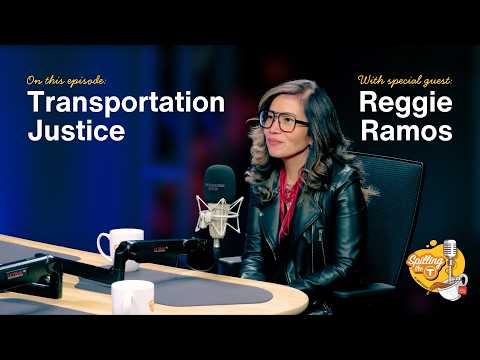
Reggie Ramos, executive director of Transportation for Massachusetts, told host Andrew Cassidy that transportation justice requires measurable investments—frequent service, affordable fares, accessibility, stronger bus service and community‑led planning—to close long-standing inequities in the Commonwealth.
Reggie Ramos, executive director of Transportation for Massachusetts (T4MA), said on the Spilling the Tea podcast that transportation justice must be concrete, measurable and rooted in community experience. "Transportation justice is a moving target," Ramos said, arguing it means ensuring access to education, employment and health care for communities that historically have faced segregation and disinvestment.
Ramos told host Andrew Cassidy that T4MA is a statewide coalition of community-led nonprofits that builds policy priorities from members' lived experience. She said membership is roughly 32 organizations and that the coalition intentionally represents communities beyond greater Boston, including the Cape, the hilltowns, and western Massachusetts.
Top priorities, Ramos said, are ensuring robust, frequent service across the Commonwealth and securing sufficient funding to expand service where people have no other options. She highlighted income‑eligible reduced fares at the MBTA and free fares on many regional transit authorities as life-changing programs that address affordability. "There is no affordable housing as long as there is no affordable transportation," Ramos said.
Ramos also emphasized accessibility for riders with disabilities, and a focus on bus service and bus lanes as equity measures: "More than a majority of bus riders are low-income and more than a majority of them are people of color," she said, adding that on-time performance is an equity issue.
On the coalition's approach, Ramos said T4MA does not set policy in isolation: staff and board do not unilaterally dictate priorities; instead, the organization conducts listening sessions, focus groups and organizing schools to shape policy based on community input. She described recent work with South Coast groups after commuter rail service extended to that region, noting lingering distrust among long-time residents and the need for sustained outreach.
Ramos framed advocates' relationship with the MBTA as complementary: advocates amplify community voice and hold implementers to account, while the MBTA has operational power to enact service changes. She called for practitioners and policymakers to ride transit themselves to ground their view in riders' realities.
The episode closed with Ramos linking transit advocacy to civil‑rights history and urging policymakers to consider transportation's role in democratic participation as the nation marks major anniversaries.