Get Full Government Meeting Transcripts, Videos, & Alerts Forever!
Get email alerts on the Affordable Housing topic
No spam. Unsubscribe anytime.
Maywood adopts overlay zoning, citing compliance with Round Four affordable‑housing obligations
Summary
Maywood council voted to adopt three overlay zoning districts and a rules update to meet part of its Round Four affordable‑housing obligation; the planner said Maywood is essentially built out and overlays are a defensive step to avoid builder's‑remedy lawsuits, while residents raised traffic and buffer concerns.
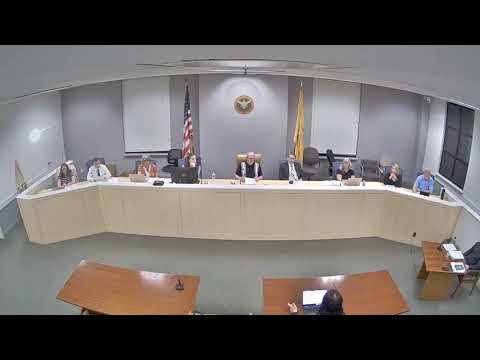
The Maywood Borough Council adopted four ordinances on second and final reading Tuesday to add three overlay zoning districts and to update the borough's affordable‑housing rules to conform with state Round Four requirements.
The borough planner told the council that the town has a Round Four obligation of 131 units assigned by the state and that, because Maywood is largely built out, the realistic development potential “is a big fat zero.” The planner said state rules require municipalities to zone for 25% of unmet need — about 38 units for Maywood — and that the overlays create a zoning option without changing the underlying uses on those properties.
Why it matters: the planner said adopting the overlays and updated regulations is the borough’s principal way to secure immunity from so‑called builder’s‑remedy lawsuits, which can allow a court to approve denser development on a municipal site if the municipality lacks required zoning. “If we don’t adopt these overlays, we are subject to builder’s‑remedy lawsuits,” the planner said, arguing the measures provide a reasonable opportunity for future development without compelling owners to sell or redevelop.
What was proposed: the ordinances add overlay districts covering an office site along East Spring Valley Avenue, a parcel along West Payic Street and an area around Brook Avenue, and repeal and replace the borough’s affordable‑housing rules to match the state model regulations. The planner stressed that overlays do not exempt a developer from planning‑board site‑plan review or zoning‑board variances; any site plan would still be reviewed and neighboring owners within 200 feet would receive mailed notice of an application.
Public concerns: several residents pressed for clarity about traffic, buffers and utility impacts. Carlos Perez, who identified himself as the owner of 215 Stone Street, asked whether overlay zoning would allow new vehicle ingress or maintenance buildings adjacent to his property. The planner and the borough clerk responded that the overlay is not a site plan and that circulation, buffer distances and placement of utilities are decided by the planning board during any future site‑plan review; the clerk noted that residents within 200 feet of a proposed project will be notified.
Allocation and sites: the planner said the statute’s allocation method flows from the state to regions and counties and then to municipalities using factors such as available land, nonresidential development and area incomes. The planner also said the borough’s old Sears site is contaminated, could not be remediated to a residential standard within the round’s timeframe and therefore could not be counted for the current obligation.
Council action and outcome: a motion to adopt Ordinances 1‑26, 2‑26, 3‑26 and 4‑26 carried on roll call; the borough clerk was authorized to advertise the ordinances according to law. The council recorded several affirmative roll‑call votes and at least one abstention; the motion carried.
Votes at a glance: Ordinances 1‑26, 2‑26, 3‑26 and 4‑26 — adopted on second and final reading; clerk directed to advertise per statutory requirements.
Next steps: adopting the overlays provides zoning credit for the borough’s Round Four plan and preserves the borough’s defensive position against builder’s‑remedy litigation, but any actual housing would require a developer to purchase property and obtain planning‑board approval. The planner reminded residents that planning‑board meetings and agendas are posted on the borough website and replayed on Maywood TV.
(Reporting based on the borough council hearing transcript.)