Get Full Government Meeting Transcripts, Videos, & Alerts Forever!
Get email alerts on the Energy Storage topic
No spam. Unsubscribe anytime.
Carson council approves 100‑MW battery storage project despite resident safety concerns
Summary
The City Council approved Development Agreement No. 33‑23 for a proposed 100‑megawatt battery energy storage facility at 18800 Broadway after a lengthy public hearing that drew supporters citing jobs and grid resilience and opponents urging a full environmental impact review because of nearby schools and residences.
The Carson City Council voted June 3 to approve Development Agreement No. 33‑23 with Vessie27 LLC for a proposed 100‑megawatt battery energy storage system at 18800 Broadway, adopting a staff finding of an SQA exemption and authorizing the mayor to execute the agreement after legal review.
The project drew dozens of speakers at a long public hearing. Supporters — including building-trade representatives — said the facility offers local construction jobs and reliability benefits. "It's going to create work opportunities," said Jesus Kamargo, who identified himself as a carpenter and Carson homeowner, adding the installations he has worked on use modern equipment and "they're safe." Edgar Coladian, speaking on behalf of the applicant, described how battery storage supports the electric grid: "These batteries store [clean energy] and, when we're at a peak time ... within seconds, these batteries turn on and put the energy back into the lines."
Opponents pressed for a more extensive environmental review and questioned the site's proximity to sensitive receptors. Multiple residents referenced the Garden Grove battery incident and urged a full state-level environmental impact report before local approval. "This project stands to make a lot of money. But in its current form ... the cost is the peace of mind of your residents for 25 years," one speaker told the council. Several speakers and a fire-protection consultant reminded the council that, in the event of a thermal runaway in a battery cabinet, water is used only to cool adjacent assets and that a burning battery may need to be allowed to burn out; Christian Ing, a fire‑protection engineer, identified himself for the record while discussing emergency response protocols.
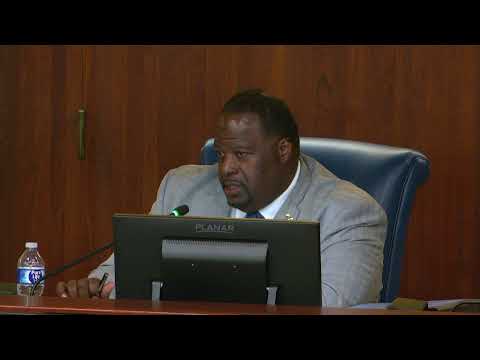
Council members and staff cited competing considerations: the region's growing need for energy storage to integrate renewables and avoid outages, and the desire to protect nearby residents and institutions. Mayor Lula Davis Holmes, who did not support every aspect of the final package, summarized concerns about community benefits and liability: "We're getting $550,000 upfront, $35,000 for Town Avenue," she said on the dais while urging stronger long‑term protections for residents. Staff replied that the development agreement and permit conditions include requirements the council requested, and that if the council had denied local approval the applicant could seek state approval — a path that would require a full environmental review but could proceed without local benefits being guaranteed.
After motion and second, the council adopted the ordinance approving the development agreement and the SQA exemption; the official action is recorded in the meeting minutes as "Motion carries." The agreement authorizes the developer to build and operate the facility subject to permit conditions and the terms of the development agreement; the council's formal vote and the published development agreement are the definitive record of the approval.
What happens next: the city manager and permit staff will proceed with ministerial permit reviews and conditions in the development agreement; the developer must satisfy the city's permit and construction requirements before operation. Opponents indicated they will continue to pursue review and oversight at county and state levels.
Note: The council hearing included multiple public-safety and procedural questions (fire department response, air monitoring, developer financial assurances and community benefit amounts). The record shows strong local interest and divided public testimony; the city's formal files and the executed development agreement will remain the authoritative source for obligations, fees and mitigation measures.