Get Full Government Meeting Transcripts, Videos, & Alerts Forever!
Get email alerts on the Budget Transfers topic
No spam. Unsubscribe anytime.
Groveland Finance Board approves $147,400 in year‑end transfers to cover legal, tech and public‑safety costs
Summary
On June 3, 2026 the Groveland Finance Board approved $147,400 in year‑end transfers to cover unexpected legal bills, technology and facilities repairs, and public‑safety staffing and overtime. Staff said most transfers are one‑time; legal costs remain uncertain pending attorney invoices.
The Groveland Finance Board voted on June 3, 2026 to approve $147,400 in year‑end budget transfers to cover legal fees, technology and facilities work, and public‑safety staffing and overtime.
Board members received a handout detailing the reallocations, which shifted $10,000 to legal, $30,000 to technology, $40,000 to facilities (repairs and maintenance), $34,000 to police overtime, $20,000 to part‑time police officers, $6,000 for fire drills, $4,000 to wages, $2,000 to fuel and $1,400 for highway collective‑bargaining allowances. The chair said the entry balances the books for fiscal year 2026.
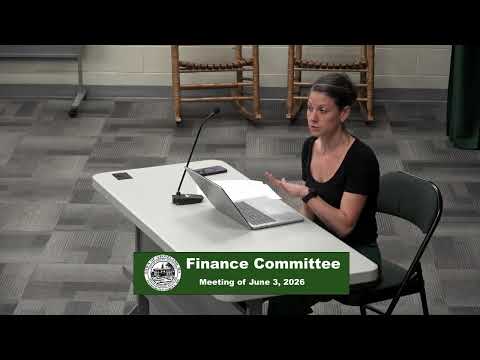
Rebecca, a town staff member who presented the transfers, told the board most of the moves are routine year‑end adjustments but flagged legal as the least certain item. “We are fairly confident, but we are waiting for some remainder of the bills to come in from May from the attorney,” she said, adding those invoices will clarify the final legal position.
Rebecca said higher technology costs reflected a recent consolidation of technology spending across town departments and work connected with the town’s December move to North Shore Regional 911, including new doors, wiring, firewall and additional cabling. Facilities increases were driven by unexpected HVAC repairs; she named Baldini as the contractor called for repair work. Rebecca described those as one‑time expenses that were budgeted in planning for fiscal year 2027 and did not anticipate recurring costs at the same level.
Board members asked about the prudence of moving funds from health‑insurance overages to pay legal bills. Brian said he worried about stripping a reserve that could be needed later; Rebecca replied the transfers use excess FY26 funds and do not duplicate funding for FY27. She also clarified the transfer process under state law: after May, year‑end transfers between accounts can be made with Finance Board approval and Selectboard sign‑off under the Massachusetts General Laws. “The Finance Board must approve and the Selectboard must,” she said.
Members noted some accounts (for example the electric‑light enterprise and school accounts, and the Essex Tech assessment) cannot be reallocated without a town‑meeting vote; Rebecca said those restrictions had been respected. The communications line showed a large balance because the town budgeted for an in‑house dispatch before being accepted by the North Shore Regional 911 center on Dec. 16, 2025; that acceptance left excess funds that were available for reallocation.
A member moved to approve the $147,400 transfer “as presented,” and a second was given. The Finance Board approved the transfers by voice vote; the transcript records no roll‑call tally and no opposition was voiced.
The board noted minutes were not available for this meeting because the responsible person was absent. Members set a tentative next meeting for Aug. 19, 2026 at 6:00 p.m., unless an earlier meeting is required.