Get Full Government Meeting Transcripts, Videos, & Alerts Forever!
Get email alerts on the Capital Budget topic
No spam. Unsubscribe anytime.
Coral Gables staff outline $5‑year CIP after 6.5% property valuation gain; $55M recommended now, big projects left unfunded
Summary
At a June 3 workshop, staff proposed funding $55.1 million of capital work and recommended $20.5 million of recurring general‑fund dollars be shifted to capital this year; commissioners pressed on city hall, mobility hub debt, sidewalk gaps by schools and Miracle Mile upkeep.
The Coral Gables City Commission on June 3 heard a staff presentation of a draft five‑year Capital Improvements Plan that directs newly available recurring revenue toward infrastructure while preserving operating budgets amid uncertainty over state tax changes.
Deputy Finance Director Paula Rodriguez told commissioners the city’s assessed values rose 6.5% this year — about 1 percentage point from new construction — and said staff set aside operating cost increases (including an estimated 23% rise in health insurance) before allocating capital funds. “Our property values increased by 6.5%,” Rodriguez said, adding that the draft plan channels roughly $20.5 million in recurring general‑fund revenue into capital this cycle.
Why it matters: staff said directing recurring, non‑operating revenue to capital lets the city invest in long‑lived assets without immediately increasing service costs. Commissioners and staff emphasized that some large programs — notably the city hall complex and the mobility hub — remain dependent on borrowing or special funding and are not fully funded in the CIP book.
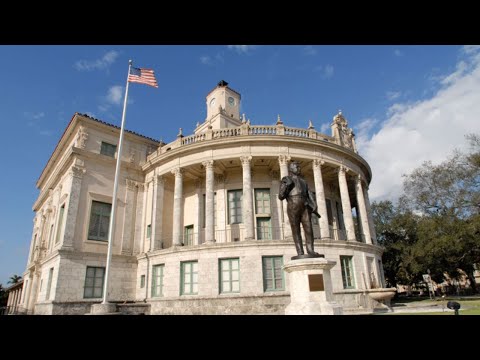
What staff recommended: the presentation separated capital requests into recurring matrices (asset renewal), priority historic projects (city hall, gondola, Venetian Pool, Alahhamra water tower), critical life‑safety items (generators), utility and sea‑level‑rise programs, parks and streetscape phases. Staff reported it can fund capital matrices at the commission’s 85% target and recommends funding a large share of recurring projects while reserving debt capacity for multi‑year items.
Commission questions and context: commissioners pressed on the scale and timing of borrowing for the city hall complex and asked which projects could be delayed or funded from non‑general sources. Staff flagged several expected but not certain appropriations (state and federal grants) that would be added to the CIP only after confirmation. The manager and finance director said final numbers and any reassignments will be reflected in the July 1 budget estimate and July 8 public hearing.
Next steps: staff will incorporate confirmed appropriations into the July 1 estimate and return to the commission in July; any bond financings or GMPs for large renovations will be brought back as separate actions. The commission did not take a final vote on the CIP at the workshop.