Get Full Government Meeting Transcripts, Videos, & Alerts Forever!
Get email alerts on the Attendance topic
No spam. Unsubscribe anytime.
District 99 reports improved attendance after minute-based tracking and scanning rollout
Summary
District 99 administrators told the board that a new Infinite Campus rollout, entrance/classroom scanning and sustained building-level interventions produced modest gains in attendance and higher participation among students in extracurricular activities.
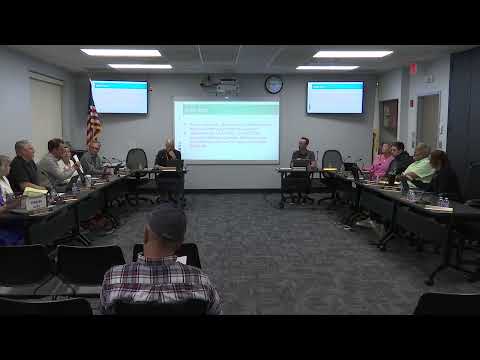
An administrator for CHSD 99 told the Board of Education that the district’s first year using Infinite Campus, combined with entrance and classroom scanning and weekly data reviews, yielded an overall minute-based attendance rate of 92.29% and a federal/report-card calculation of 93.56%. The presentation emphasized that the district shifted from assuming students were present by default to assuming they were absent unless recorded, which complicates year-to-year comparisons but, administrators said, underscores improvement.
The presentation framed the attendance work as a whole-district effort involving technology, building leadership and communications. The administrator said the district used an “unaccounted-for” report to locate students in buildings and that teachers received Monday/Thursday emailed reports to prompt targeted outreach. “We went from assuming students were present to assuming students were absent and we made a shift to minutes,” the administrator said, summarizing the technical change and its practical effects.
Administrators broke the year into four-week chunks for deeper review and said the first eight weeks showed the highest rates of tardies. Building-level tactics included a communications ad campaign, a security/dean partnership to use the unaccounted-for reports, rearranging commons furniture for supervision, and a trial “tardy brigade” that combined automation with follow-up conversations. Karen, a building administrator, described a mix of deterrents and positive incentives and credited teachers for an idea to restrict hall passes in the first and last 10 minutes of class to reduce hallway traffic.
The board heard specifics on two commonly tracked measures: distinct students with tardies (2,572 distinct students had tardies in quarter 1) and single-period unexcused absences (AUS), defined as missing one period in a day. Administrators said 3,596 students recorded at least one single-period AUS during the year with an average of 7.89 such absences among that group. They emphasized these per-student averages do not mean every affected student missed many periods; some are outliers while others had a single incident.
Participation in extracurricular activities correlated with higher attendance. Presenters reported that students involved in sports or clubs had minute-based attendance near the mid-90s (95.3% for fall-season participants) versus about 90.66% for nonparticipants. Over the year, roughly 71% of students participated in at least one activity and that cohort’s yearlong minute attendance averaged 93.61% compared with 87.07% for nonparticipants.
Administrators said the district logged about 5,325 manual staff-initiated contacts (phone calls or emails) for attendance across the year, representing 1,945 distinct students who received direct outreach in addition to automated messages. The district plans more granular analysis next year — separating block vs. non-block days, examining first-period spikes and surveying students for reasons behind late arrivals — and will set targets at an upcoming administrative planning meeting.
The presentation closed with the administration saying that minute-based tracking has improved the district’s ability to monitor attendance at the class-period level and to target interventions, while noting dependencies on family logistics (drop-off times) that schools cannot fully control. The board scheduled follow-up work and data dives for the coming weeks.