Get Full Government Meeting Transcripts, Videos, & Alerts Forever!
Get email alerts on the Property Tax Reform topic
No spam. Unsubscribe anytime.
Dunedin officials warn state homestead-exemption bill could cut millions from city coffers
Summary
City staff briefed commissioners on a fast-moving state proposal to raise the homestead exemption; staff estimated a $4.2 million revenue loss for Dunedin if a $150,000 exemption takes effect in fiscal 2028 and about $6.3 million if a $250,000 exemption takes effect in fiscal 2029, and commissioners asked staff to prepare fact sheets and outreach plans should the measure reach referendum.
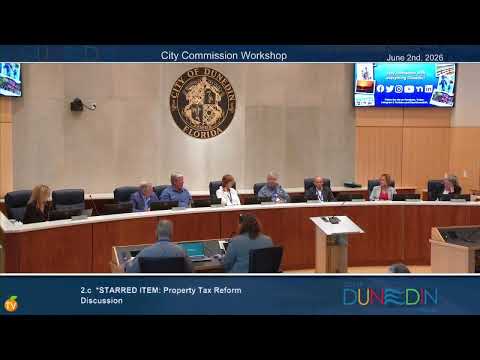
Dunedin staff told commissioners on Wednesday that a headline state proposal to raise the homestead exemption could cause multimillion‑dollar revenue losses for the city and complicate the FY2027 budget the commission is currently reviewing.
Nicole Delfino, strategy and sustainability manager, told the commission that legislative language moving through the Florida Senate and House would raise the homestead exemption to $150,000 beginning in calendar 2027 (impacting the city’s FY2028 revenues) and to $250,000 in 2029 under one of the bill’s scenarios. Staff estimated a $4.2 million revenue decrease for Dunedin in fiscal year 2028 under the $150,000 exemption and a $6.3 million decrease in fiscal year 2029 under a $250,000 exemption.
Delfino and other staff described the issue as rapidly developing: the bill had attracted numerous amendments, the Senate committee debate ran over six hours and passed out of committee, and staff cautioned that ballot language and the trust‑fund components discussed in Tallahassee are currently vague. “There was a lot of discussion around that language yesterday,” Delfino said, and staff stressed the need to prepare clear fact sheets that explain potential local service reductions in exchange for any reduction in property taxes.
Commissioners asked whether county or state funding would reliably backfill lost revenues; staff said the proposed trust fund discussed in committee had no dedicated revenue stream in the bill text and that eligibility and distribution criteria were unspecified. Commissioners directed staff to prepare outreach materials and to follow the floor action closely; staff noted that if the bill clears both chambers it would go to referendum and require voter approval (likely a 60% threshold) to take effect.
Commissioners expressed concern about the speed of the state process and the ambiguity around what services could be preserved or cut if the revenue shortfall materializes. Several commissioners called for immediate local education and advocacy and said they would consider public statements as elected officials while the city provides factual education materials to residents.