Get Full Government Meeting Transcripts, Videos, & Alerts Forever!
Get email alerts on the School Budget topic
No spam. Unsubscribe anytime.
Guilford Board weighs $1.5 million in budget cuts, preliminarily agrees on $282,850 in savings
Summary
At a Feb. 2 special meeting the Guilford Board of Education reviewed a $1.5 million menu of possible reductions from Superintendent Dr. Freeman and agreed on $282,850 in transportation and tuition adjustments to start narrowing a 7.13% budget increase; no final vote was taken.
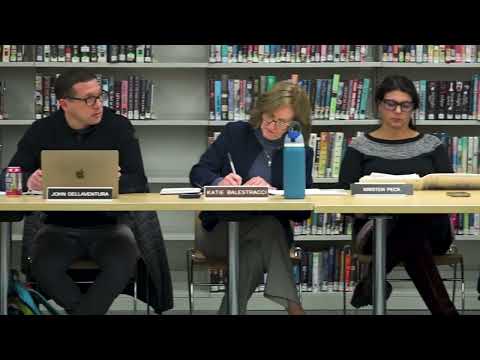
Guilford — The Guilford Board of Education spent its Feb. 2 special meeting combing through a $1.5 million worksheet of possible reductions proposed by Superintendent Dr. Freeman as the district confronts a 7.13% budget increase. The board did not take a final budget vote and intends to resume discussion at its regular meeting on Feb. 9.
Dr. Freeman opened the discussion by describing the worksheet and its intent: “this worksheet has a total dollar value of $1.5 million,” and he said the list was designed to give the board “some room to move” while noting many items were offered hesitantly and not as firm recommendations.
Why it matters: The proposals are aimed at trimming growth in the operating budget without immediately cutting classroom services. Board members repeatedly emphasized the trade-offs between short‑term savings and longer‑term impacts on instruction, student supports and extracurricular programs.
The board reached early consensus on $282,850 of reductions concentrated in four lines: revising the special‑education excess‑cost reimbursement assumption (a change in the budgeted state reimbursement from 59% to 63% was presented as producing $77,850 in savings); a proposed $75,000 reduction in regular transportation by shifting some routes from full buses to vans; and a $100,000 reduction in a multi‑town “Strive” tuition arrangement coupled with an associated $30,000 reduction in special transportation. Board members described those four items as achievable savings they were comfortable advancing for further review.
Where members disagreed: Deeper cuts involving staffing and programming drew more resistance. Dr. Freeman outlined possible reductions that include cutting up to two high‑school sections (effectively two FTEs), reducing one or two instructional coaching/specialist positions (estimated about $78,000), trimming interventionist positions, and reducing custodial or paraprofessional roles. “The coaching model has the multiplier effect,” Dr. Freeman said, arguing that coaches improve instruction across classrooms; other board members said they worried such reductions would undermine support for already stretched teachers.
Textbooks and curriculum stipends also drew debate. Administrators proposed deferring a planned $237,000 district social‑studies textbook purchase for at least one year and withdrawing four newly added curriculum stipends; several board members suggested phasing purchases by grade or keeping a smaller textbook allocation to minimize instructional disruption.
Athletics was repeatedly raised as a possible savings area — from trimming assistant coaching stipends to not staffing cheerleading if participation falls below an informal 10‑student threshold — but members warned of community and equity consequences of cutting co‑curricular programs. The board also discussed possible revenue options such as controlled local advertising at athletic facilities and pay‑to‑play fees, but members expressed mixed views and concerns about unintended impacts.
Next steps and procedural note: Board members asked the administration for written clarifications on several line items (detailed definitions on contracted services, adult education, district media support, and the travel/professional development increases) and for updated projections. No final votes on budget lines were taken; the board’s next regular meeting is set for Monday, Feb. 9 in the Guilford High School Media Center, where budget deliberations will continue.
A voice motion to adjourn was moved and seconded at the close of the session and passed on a voice vote. The board will not finalize a budget at this special meeting.