Get Full Government Meeting Transcripts, Videos, & Alerts Forever!
Get email alerts on the English Learners topic
No spam. Unsubscribe anytime.
District DAC reviews year of work on English‑learner supports, requests continued board backing
Summary
The district English Learner Advisory Committee presented completed duties under California Education Code and outlined outreach increases — including social media, ASL and Vietnamese translation, parent meetings and an increase in site representation from 19 to 63 — and asked the board for continued support and resources.
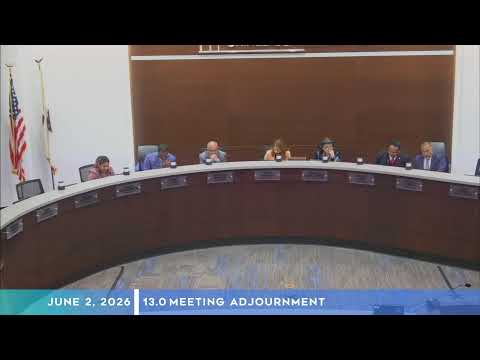
The San Bernardino City Unified District’s District English Learner Advisory Committee (DAC) presented its year of work to the board on June 2, outlining required legal duties the committee completed and additional outreach and training activities it implemented.
Tex Costa, director of the secondary multilingual department, introduced the committee officers and said the group had completed items required under the California Education Code. Romy Gamino cited specific statutory duties, telling trustees the DAC had completed the district master plan revision in December 2025, a district‑wide needs assessment in May 2026, establishment of district goals in October 2025 and reclassification procedure review in January 2026 (citing the California Education Code reference read at the meeting).
Committee members described operational work during 2025–26: parent and site ELAC representative meetings, training videos for parent leaders, multilingual outreach via ParentSquare and social platforms, Facebook live broadcasts, Vietnamese interpretation and American Sign Language at meetings, and cultural celebrations to increase engagement. Maricella Nunes and others listed presentations and parent trainings on topics such as human trafficking awareness, special education reclassification, positive discipline, lottery school procedures, mental health services, and school safety. The DAC reported growth in representation from 19 site representatives to 63 districtwide and said it will continue regular meetings and trainings in 2026–27.
Members asked the board for continued support — material and staff time — to sustain translation, training, volunteer coordination, and home‑to‑school outreach. Secretary Consuelo Rubio asked the board simply for “support to us” because DAC members balance volunteer time with family and work obligations.
Why it matters: DAC is a statutorily required advisory body that provides parent‑level review and comment on programs serving English learners; district staff told the board the DAC’s input is used in the LCAP and other district planning documents. The committee’s increased multilingual outreach, added ASL and translation services, and higher parent representation were presented as concrete gains in access for English learners and families.
Trustees thanked the committee and asked staff to help publicize action‑table page references in the LCAP binder so trustees and the public can more easily find which sites receive targeted actions and funding. DAC said it will continue to record meetings and post minutes to the district website.