Get Full Government Meeting Transcripts, Videos, & Alerts Forever!
Get email alerts on the Immigration Enforcement topic
No spam. Unsubscribe anytime.
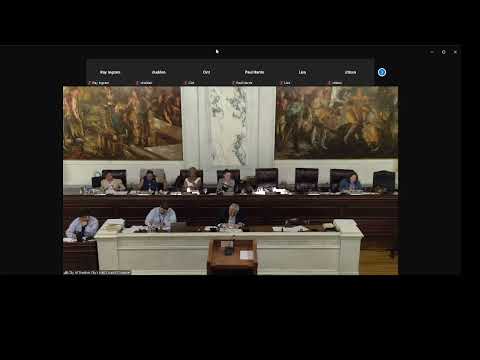
Trenton council amends, then tables ordinance aimed at limiting local cooperation with ICE after intense public hearing
Summary
After hours of public testimony focused on detainers and police collaboration with ICE, Trenton City Council approved clerical changes to Ordinance 26‑48 but tabled final passage to the next meeting amid calls for stronger, explicit prohibitions and accountability measures.
Trenton — The City Council on Monday amended the language of an ordinance intended to restrict local law‑enforcement cooperation with federal immigration authorities, then voted to table final passage after an often emotional public hearing in which dozens of residents and advocates urged stronger protections against ICE detainers.
Ordinance 26‑48, described by city attorneys as implementing local notification and accountability mechanisms to supplement state limits on immigration enforcement, drew sustained public comment from immigrant‑rights organizers, rapid responders and professionals who said the draft still contained loopholes that could allow authorities to honor ICE administrative detainers without a judicial warrant.
"Detainers are administrative requests, not judicial warrants," rapid responder Jessica Defalco told the council. "If the ordinance does not specifically prohibit honoring detainers without a warrant, it preserves a pipeline to detention and deportation." (Speaker list: Jessica Defalco.)
City legal staff told the council they had discovered clerical drafting errors in multiple paragraphs — places where 'shall' and 'shall not' were reversed — and asked members to approve those corrections so language would reflect the intent negotiated with community groups. Council voted unanimously to adopt the technical fixes.
"These changes correct drafting mistakes and align the ordinance with the citizen groups' requests," municipal counsel Edward Colloji told the chamber, adding that the edits do not substantively reverse policy aims but clarify obligations in sections 3A, 3B, 3D and 5A.
But advocates who had participated in negotiations said the revised draft still lacked two elements they consider essential: an unambiguous prohibition on honoring ICE detainers absent a judicial warrant, and enforceable accountability measures for officers who violate the ordinance.
"It's not enough to pass a paper ordinance if there's no mechanism to hold anyone accountable," said Joanna Lloyd, a rapid responder. "We need to ensure local custody does not become an ICE pipeline without judicial oversight." (Speaker list: Joanna Lloyd.)
Council members were split about next steps. Several members and the administration emphasized the many meetings held with advocates, the police department, and legal staff; other members and public speakers urged delaying final adoption until the detainer language and accountability provisions could be explicitly strengthened.
Vice President Williams said earlier negotiations had covered issues including perimeter formation, task‑force cooperation and other operational details, and stressed the need to weigh municipal legal limits against the council's policy goals. "We have worked very hard on this," Williams said at one point, noting the limits of municipal authority while urging action.
After debate, council agreed to table Ordinance 26‑48 to the next public meeting (two weeks hence) to allow time for targeted revisions and additional review. Before tabling, the body voted to approve the technical clerical amendments.
What happens next: Council members and community groups said they will continue negotiations, with advocates pressing for explicit non‑cooperation language about detainers and clearer enforcement or redress mechanisms. The ordinance remains on the docket and will return for a public hearing and vote at the next meeting.