Get Full Government Meeting Transcripts, Videos, & Alerts Forever!
Get email alerts on the Land Use topic
No spam. Unsubscribe anytime.
Lake Forest planning commission certifies EIR and approves Enterprise Way warehouse with added truck‑route and nighttime conditions
Summary
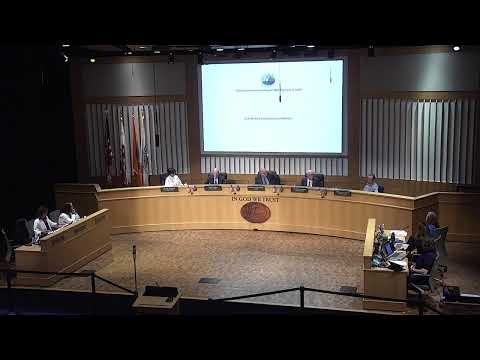
After hours of public comment expressing concerns about truck traffic, noise and unknown future tenants, the Lake Forest City Planning Commission on June 4 certified the final EIR and approved a site development permit for a new industrial building at 26200 Enterprise Way, imposing new conditions including a nighttime quiet zone, signage and truck‑route limits.
The Lake Forest City Planning Commission voted unanimously on June 4 to certify a final environmental impact report and approve a site development permit for demolition of an existing building and construction of a new industrial building at 26200 Enterprise Way, a project staff described as light industrial space intended for office, manufacturing and warehouse uses.
Jennifer Mansour, the city planner presenting the staff report, told commissioners the project is located in the Pacific Commerce Center planned community and "is a request for the demolition of an existing building and the construction of a new industrial building on Enterprise Way." Mansour said the final EIR includes responses to 122 comments and identified mitigation measures for many topics but found two "significant and unavoidable" impacts — vehicle miles traveled (VMT) and greenhouse gas emissions — requiring the commission to consider findings and a statement of overriding considerations.
Why it matters: nearby residents from the Meadows and adjacent communities packed the meeting to say the project, which would bring large‑truck traffic adjacent to homes and senior housing, threatens sleep, health and safety. Dozens of people urged commissioners to deny approval or impose enforceable limits on truck movements, night operations and tenant types. Union labor speakers urged the commission to approve the project for local jobs and investment.
Residents told the commission they feared noise from round‑the‑clock truck movements, backup alarms and diesel emissions. "I respectfully urge the commission to reject this proposal," said William Wong, a resident who spoke during the public comment period. Speakers repeatedly cited recent regional incidents to argue that unknown future tenants could create hazards and that the EIR understates local impacts.
City attorney Alicia Wintersweik explained the city's process for handling late comments and described key measurements in the EIR response. She repeated the technical distances staff used in the analysis: the nearest driveway to residences is 577 feet and the loading docks are 328 feet from the nearest home. Wintersweik also summarized the EIR's noise modeling and mitigation assumptions, including a daytime truck movement noise reference of 76.3 dBA at 20 feet and calculated levels of about 61 dBA at 50 feet (day) and 55 dBA at night for assumed truck activity.
Commissioners pressed the applicant and staff on enforceability and truck routing. The developer's representative (identified in the hearing as Chris) and consultants described site access from Enterprise Way, two driveways, and the internal circulation that serves dock doors. The applicant agreed to several operational commitments during the hearing: designation of an internal driveway as a nighttime "quiet zone," limitations on audible backup alarms during that period, posted signage and tenant notification of restrictions, and measures to encourage electric trucks and reduced idling. Staff and consultants confirmed the project includes five off‑site intersection improvements and changes to traffic signal timing and lane geometry to accommodate truck turning movements.
Conditions and vote: after a short recess to draft revised conditions, commissioners returned with additional restrictions tied to the permit. The planning commission adopted revised findings, certified the final EIR and approved the site development permit with added conditions that include a designated quiet zone adjacent to the Meadows between 10:00 p.m. and 7:00 a.m. (prohibiting audible backup alarms in that driveway and requiring silent or camera‑based detection systems), required signage and tenant notification of nighttime rules, a prohibition on trucks exiting to Bake Parkway from the site's north corner driveway, and requirements to implement the traffic intersection improvements prior to issuance of a certificate of occupancy. The commission's action also included the staff‑recommended mitigations; the EIR's identified VMT and greenhouse‑gas impacts remain noted as significant and unavoidable in the public record.
What happens next: the planning commission's approval authorizes the site development permit subject to the adopted conditions; building permits and any tenant‑specific reviews (including any review of hazardous materials or industrial processes) will be handled in subsequent building and fire‑safety reviews. The record shows the city and OCFA will review future tenant operations and any hazardous materials inventories as part of standard permitting.
The hearing lasted several hours and closed after the unanimous vote. The commission did not adopt numeric nightly truck caps as a stand‑alone limit beyond the EIR assumptions, but it added enforceable operational restrictions and routing controls aimed at reducing nighttime impacts for nearby residents.