Get Full Government Meeting Transcripts, Videos, & Alerts Forever!
Get email alerts on the Naming Policy topic
No spam. Unsubscribe anytime.
Santa Rosa analyst outlines new city asset naming and renaming policy to design review board
Summary
Luke Faser of the City Manager's Office briefed the Design Review and Preservation Board on Council Policy 0075, explaining the standardized application intake, petition requirement and the advisory role the board will play before final council action.
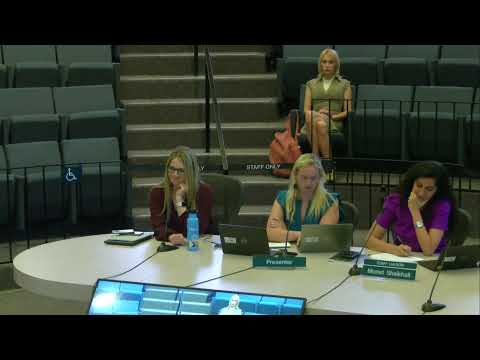
Luke Faser, an administrative analyst in the City Manager’s Office, presented the City Asset Naming and Renaming Policy (Council Policy 0075) to the Design Review and Preservation Board, explaining how applications will move from intake to a final City Council resolution. "Last year council policy 0075 was adopted," Faser said, and he described the new standardized packet and workflow staff will use to review eligibility and petitions.
Faser told the board the intake step requires strong community support before an item reaches the board: an application must include a petition of 1,000 signatures with 50% from residents or business owners within a half-mile of the asset. He said the board’s role is advisory — to evaluate historic context, integrity and whether a proposed name fits long-term preservation goals — with final action taken by City Council after a study session and a public hearing.
Board members pressed staff on how the policy applies to streets versus ceremonial street names and whether standardizing materials will speed processing. Faser said ceremonial street naming has a carveout in the policy and that he would need to research how the policy applies to official street renaming; on timing he said the standardized materials are intended to reduce back-and-forth and increase predictability, though exact timeframes are not yet known.
Members of the public praised the emphasis on equity and transparency in the new process and asked for clearer fee and waiver schedules. Janice Carman, a member of the public, said the policy "gives structure to the process" and urged the board and staff to provide clear information about cost waivers so applicants understand who qualifies.
The presentation covered the full workflow: intake and eligibility screening by the City Manager’s Office, a first board meeting where the board decides whether the proposal should advance to public outreach, possible meeting two for alternative names, a council study session, and then council’s final public hearing and resolution. Faser reminded the board that applicants typically bear renaming costs unless City Council chooses to waive them.
Board members and staff agreed the new packet and outreach steps should improve fairness and predictability, while remaining mindful that the board’s recommendations are advisory and that controversial or ambiguous cases will still require careful review before being forwarded to council.