Get Full Government Meeting Transcripts, Videos, & Alerts Forever!
Get email alerts on the Local Government topic
No spam. Unsubscribe anytime.
Council approves two small land sales, adopts parking and juvenile-board ordinances and clears multiple vendor licenses
Summary
The council voted to sell two uneconomic town parcels with development contingencies, adopted an ordinance restricting parking on May Street, amended juvenile hearing-board code, and approved several temporary liquor/vendor licenses; some vendor items were held pending property-owner signoff.
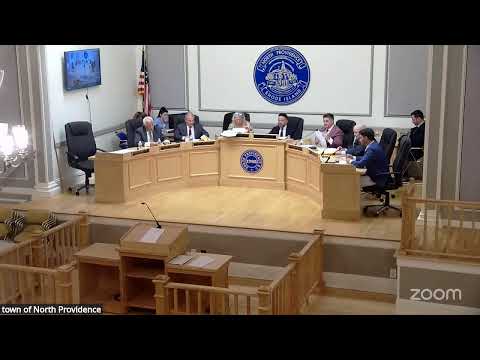
At its June 2 meeting the North Providence Town Council approved multiple routine land and regulatory items, including the sale of two small town parcels and several ordinances and vendor licenses.
Mayor Lombardi outlined two parcels the town considers "useless to the town": a portion of Lauria Street proposed to be sold to Michael Baron and an undeveloped road segment near 1190 Charles Street used informally for condominium parking. Council members asked that purchase-and-sale agreements include a contingency forbidding construction or road development; the council approved the sales with that restriction.
On ordinances, the council adopted ordinance 26-007 to place certain no-parking restrictions on May Street and ordinance 26-008 amending Chapter 20-249 related to the juvenile hearing board; both motions carried by voice vote.
The council also considered several license applications. It approved a Class F1 liquor license for an October 4, 2026 event at Camp Mian and granted peddler/vendor licenses for seasonal mobile food vendors and fireworks sellers, while removing or holding a few items pending property-owner confirmation. Victualing and restaurant licenses for Restaurant Elo (owners Sasha and Christina Jeron) were approved after the owners confirmed hours of operation.
Why it matters: These actions clear smaller but practical items from the town agenda — converting underused town remnants into taxable private parcels with restrictions, adjusting traffic controls, and processing routine business licenses — while preserving the council’s ability to restrict future development through deed conditions.
Next steps: The clerk will record sale documents with the noted no-development addenda and vendors granted provisional licenses must meet any outstanding property-owner approvals identified during the meeting.