Get Full Government Meeting Transcripts, Videos, & Alerts Forever!
Get email alerts on the Budget Adoption topic
No spam. Unsubscribe anytime.
Forsyth County adopts FY27 budget with small tax increase to fund special-education staffing; courthouse allocation restored
Summary
On June 4, 2026 the Forsyth County Board of Commissioners approved a FY27 budget (Option Two) that includes a modest tax-rate increase to place $1,317,665 in reserve for exceptional‑children staffing and restores a separate courthouse equipment allocation to $350,000; the motion passed 5–2.
Forsyth County commissioners on June 4 adopted the county’s fiscal year 2026–27 budget by approving Option Two, a package that includes a modest tax-rate increase tied to a $1,317,665 budget reserve earmarked for the school system’s exceptional‑children (EC) instructional staffing and a board amendment restoring a courthouse equipment line to $350,000.
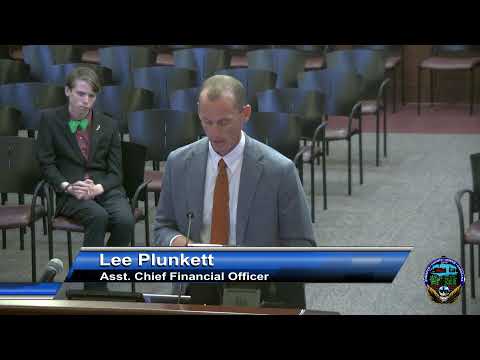
Budget Director Kyle Wolf told the board that “putting an almost $600 million budget together takes a lot of work,” and walked commissioners through three ordinance options in the published packet. Option Two, which the board adopted, keeps most manager recommendations in place while adding a small tax increment intended to generate roughly $1.3 million for EC staffing; Wolf said that language places those funds in a budget reserve and requires the school system to provide documentation before the county releases the money.
Commissioners also amended the ordinance to increase the courthouse equipment allocation that appears in the published ordinances as $141,068; the board voted to restore that line to $350,000 to cover equipment needs discussed by the courts, including cell‑phone locker or Faraday‑bag solutions. The increase was described in debate as necessary to address court security and equipment requests; the board’s action raises the courthouse allocation by about $209,000 from the amount in the published ordinance.
The motion to adopt Option Two with the courthouse amendment carried 5–2. The transcript records the 5–2 tally but does not list the two “no” votes by name in the audio record provided.
Board members debated the budget’s tradeoffs at length. Supporters said the added tax increment would have a modest impact on a median homeowner while helping rehabilitate reduced EC staffing levels; opponents questioned whether the county and school system had adequate specificity for how the added funds would be spent. Wolf and others said the EC allocation would be set aside in a reserve and released after the county manager reviewed a school-submitted plan showing the funds would be used for EC positions and services.
The ordinance adopted by the board also includes standard provisions adopted each year — pay plan adoption; appropriation of special revenues such as 911 and law‑enforcement funds; contingency guidance (a $500,000 contingency was noted); and authorizations for contracts within policy thresholds. The FY27 effective date was set for July 1, 2026.
Two community grants that presented conflicts of interest were handled separately after the budget vote: a $15,940 Smart Start grant and a $4,814 Junior Achievement grant. The board moved those lines to a separate vote to allow commissioners with nonprofit affiliations to recuse themselves; the clerk recorded the recusals and both grants were approved by the eligible commissioners.
What happens next: the budget ordinance adopted by the board becomes effective July 1, 2026. The county manager and finance staff will implement the approved appropriations and the school system must submit the documentation required for release of the EC budget reserve.