Get Full Government Meeting Transcripts, Videos, & Alerts Forever!
Get email alerts on the Zoning Variance topic
No spam. Unsubscribe anytime.
Board of Appeals defers decision after hearing on variance to add pumps at former Arundel Market
Summary
At a public hearing on Mir Realy LLC’s request to add fuel pumps at the former Arundel Market, the Board of Appeals found the applicant had not proven several legal variance criteria (reasonable return, unique circumstances, safety) but concluded the proposal would not alter the district’s essential character; the board will reconvene in two weeks to consider written findings and a final vote.
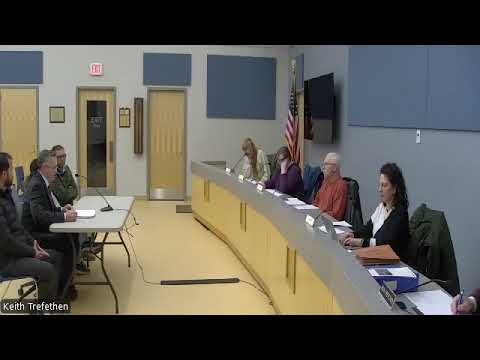
The Board of Appeals held a public hearing on a variance request from Mir Realy LLC to add fuel pumps to the former Arundel Market on Route One and deferred a final decision after voting on the five legal prongs that govern variance relief.
The applicant argued the site cannot support a market without fuel, saying the business needs multiple fuel types (including diesel) and about four pumps to be economically viable. An applicant representative told the board the company operates roughly 24 locations across New England and that adding fuel would make the location financially sustainable. “We want to serve not just beer, wine and gas. We want to have nice pizza, nice food,” the applicant representative said, describing the operation as a food-focused market with secondary fuel sales.
Neighbors and an operator of an existing nearby station opposed the request. A resident who lives behind the property, Stacy, said she supports reopening a market but opposed additional pumps because of traffic, noise, potential emissions and impacts on property values. “We welcome a market and cafe, but another gas station would create more traffic and nuisance at that intersection,” Stacy said. Tom Soier, a civil engineer representing CM Brown Company (owner of the existing gas station), told the board the application was incomplete and argued the applicant had not met the variance standards, citing traffic, safety and planning concerns.
Why it matters: The board considered the controlling five-prong standard for a general variance — reasonable return, unique circumstances of the lot, whether the variance would alter the essential character of the locality, whether the hardship was self-created, and whether the proposed use would cause unsafe, unhealthful or nuisance conditions. The board may deny or approve a variance only if the record supports each required prong.
Deliberations and votes: After public comment and questioning, the board voted on each prong separately. The board found: - Reasonable return: The board voted that the applicant had not provided adequate evidence that the property could not yield a reasonable return without the variance (motion passed). The board noted the owner receives rental income from on-site buildings and that evidence in the record was largely anecdotal. - Unique circumstances: The board voted that the applicant had not shown a hardship unique to this parcel; members said the reconfigured intersection and traffic characteristics affect multiple lots in the downtown business district. - Essential character: The board voted that allowing fuel pumps would not alter the essential character of the downtown business district, noting gas stations are an allowed use in the zoning district and that planning board site review could address traffic and nuisance mitigation. - Self-created hardship: After discussion and a legal reminder that prior knowledge of an ordinance is not necessarily dispositive, the board voted that the hardship was not self-created and that this prong was met. - Safety and nuisance: The board voted that the applicant had not provided adequate evidence the proposed use would not cause unsafe, unhealthful or nuisance conditions; members cited concerns about additional traffic, lighting, noise and fumes and said the site plan in the record was incomplete.
No final grant or denial: The board did not take a final vote to grant or deny the variance. Instead, members directed counsel to draft written findings that reflect the board’s determinations on each prong and scheduled a reconvened public meeting in roughly two weeks to consider the draft findings and then take a final vote.
What was in evidence: The record includes the applicant’s testimony that the purchase price exceeded $1 million and that the business would require substantial investment (applicant said the work would cost on the order of a million dollars). The record also shows an occupied mobile home on the property, plans to remove an existing white building, and the applicant’s plan to install about four fuel pumps and continue food-focused retail. CM Brown’s representative submitted written materials (referenced in the hearing) and argued the application’s plot plan lacked required dimensions and setback details.
Next steps: The board will publish draft written findings for review and reconvene in public to take the final vote on the variance application. The board’s staff said the written decision must be issued in accordance with the board’s procedural deadlines once the final vote is taken.
Sources: Public hearing testimony and board deliberations at the Board of Appeals meeting on Mir Realy LLC’s variance request; attendees included chair Paul Chansky, board members Sarah and Tia, an applicant representative, Tom Soier (civil engineer for CM Brown Company), and multiple public commenters including Stacy.