Get Full Government Meeting Transcripts, Videos, & Alerts Forever!
Get email alerts on the Short Term Rentals topic
No spam. Unsubscribe anytime.
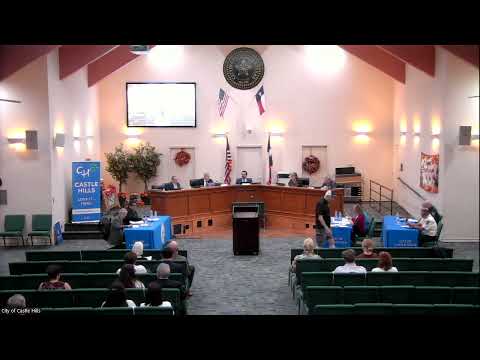
Castle Hills Council hears residents’ complaints about short-term rentals and extends moratorium to Dec. 9
Summary
After lengthy public comment on noise, trash and enforcement gaps, the City Council extended a moratorium on issuing short-term rental permits to Dec. 9, 2025, and signaled that enforceability and nuisance-code changes will be addressed in coming meetings.
The Castle Hills City Council on Nov. 18 extended a moratorium on issuing short-term rental (STR) permits to Dec. 9, 2025, after residents described ongoing noise, trash and nuisance problems linked to STRs and legal staff advised council that enforcement, not just ordinance language, is the central issue.
Residents who live near several STRs described repeated disturbances. "There has been persistent noise disturbances, bachelor parties, and loud gatherings continuing into the early morning hours," Becky Smith told the council, adding she had seen property damage and unsecured trash that attracted pests. Carrie Dodril said she and her neighbors had not expected to move next to an STR and raised concerns about falling property values. "If short-term rentals take over, people aren't going to want to move into the neighborhood," she said. Justin Schwitzer and others urged council to delay action on the proposed revisions and to study enforcement mechanisms and transfer/recording vulnerabilities.
City staff reviewed the ordinance history: Castle Hills adopted STR regulations in 2020 and approved a 120-day moratorium April 8, 2025, directing the zoning commission to study changes. The zoning commission recommended amendments, including increasing permitted STR permits from 10 to 24 and making property owners jointly liable for violations; staff presented those recommendations and noted some enforcement triggers discussed earlier (such as lowering the violation threshold for nuisance designation) belong in the separate nuisance ordinance rather than the zoning code.
Legal counsel told council enforceability is the primary concern and suggested changes to the nuisance code to improve enforcement. Councilmember May moved to extend the moratorium and amended the motion to match the posted agenda date; the amended motion to extend the moratorium to Dec. 9, 2025, carried, with Councilmember Joyce recorded as abstaining.
Next steps: staff and legal counsel indicated they will return with more targeted revisions — including a possible nuisance-ordinance amendment (to change violation thresholds) and options to strengthen enforcement — at December or January meetings. The council also left open the possibility of extending the moratorium again if necessary.