Get Full Government Meeting Transcripts, Videos, & Alerts Forever!
Get email alerts on the Housing Recovery topic
No spam. Unsubscribe anytime.
Williams County approves 13‑bed sober living home amid weeks‑long debate over safety and federal housing law
Summary
After hours of public comment and legal briefing on federal fair‑housing protections, the Williams County Commission voted 3‑2 to grant a conditional use permit to Cornerstone Recovery Foundation for a sober living home with capacity up to 13 residents in Little Muddy Estates. Commissioners and residents clashed over septic capacity, emergency response times and enforceable CUP conditions.
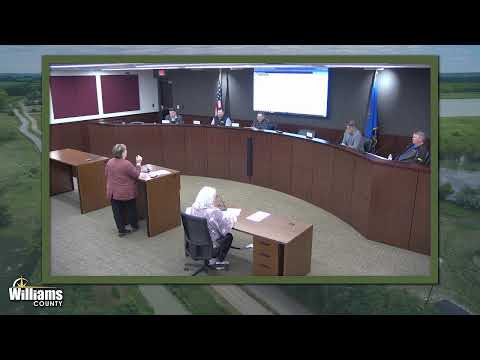
The Williams County Board of Commissioners voted 3‑2 on June 2 to approve a conditional use permit for a proposed 13‑bed sober living home operated by Cornerstone Recovery Foundation.
Steven Samard, founder of Cornerstone Recovery, told the commission he changed his mind about placing the home only where neighbors supported it because of the urgent need for reintegration housing. “This project is not a commercial business … It is a home,” Samard said, urging the board to weigh facts over fears.
County legal counsel warned commissioners that federal law constrains denials based on the status of prospective residents. “The DOJ has taken the stance that you cannot deny a CUP because people are recovering from alcoholism or drug addiction,” Karen, the county’s legal counsel, told the board, noting Fair Housing Act and Americans with Disabilities Act protections and recent federal enforcement actions.
Opponents focused on infrastructure and safety. Kim Olsen, who cited a recent shutdown of a similar facility in Mayville, said regulators had revoked a permit there after code and operational violations and recommended locating such a facility within city limits for closer oversight. “Seeds of Eden … was shut down in March of 2026,” Olsen said. Little Muddy Estates residents warned of long emergency response times, septic systems designed for smaller households and increased daily traffic.
State Fire Marshal Matt Clark, who attended to address fire‑code questions, said local or city location does not exempt an operator from modern fire‑code requirements: any facility will need to meet the International Fire Code 2021 standards before receiving occupancy authorization.
Commission debate centered on enforceable conditions versus federal nondiscrimination limits. Commissioners discussed whether conditions tied to traffic, septic upgrades, background‑check protocols and operational plans would be legally defensible. Karen advised the board that neutral, land‑use‑focused conditions (for example, septic compliance or state fire‑code conformance) are more defensible than conditions tied to the residents’ disabilities or recovery status.
Commissioners included two planning and zoning recommendations as conditions: that the operation comply with all state and federal regulations for group homes and adhere to Williams County zoning and subdivision regulations. The motion passed on roll call: Steve — yes; Corey — yes; Bo — no; Chris — yes; Barry — no.
The approval requires the applicant to follow the county’s permitting process and applicable state and federal law. The commission’s action notes the tension between the county’s obligation to protect public safety and infrastructure and legal limits on denying housing based on disability or recovery status; several commissioners urged the applicant to submit detailed operational procedures, background‑check processes and clear management plans for the county record.
Next steps: the applicant must satisfy any state health, fire and septic requirements prior to occupancy and may be subject to revocation of the CUP if objectively enforceable conditions are violated and the violation is unrelated to residents’ protected status.