Get Full Government Meeting Transcripts, Videos, & Alerts Forever!
Get email alerts on the Reserve Officers topic
No spam. Unsubscribe anytime.
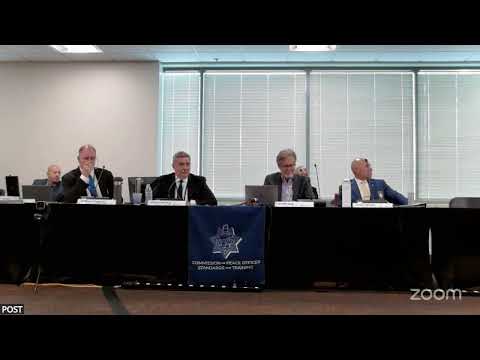
Stanford, Pacific and Santa Clara ask POST to let university reserve officers serve as FTOs
Summary
Stanford, University of the Pacific and Santa Clara County presented a request to POST to resolve a regulatory conflict that prevents level‑one reserve university peace officers (Penal Code 830.75) from serving as Field Training Officers or obtaining basic POST certificates despite performing full‑time campus policing duties; staff was directed to draft language and return in September.
Representatives from Stanford Department of Public Safety, University of the Pacific Department of Public Safety, Santa Clara County Sheriff’s Office and Stockton Police Department asked the commission to approve a targeted regulatory fix to allow level‑one reserve officers appointed under Penal Code section 830.75 to serve as Field Training Officers (FTOs) and to be eligible for POST certification when they meet full‑time duties and training requirements.
University chiefs and deputies told commissioners they operate under a long‑established model (codified by Assembly Bill 2361/PC 830.75) where university officers are appointed through municipal agreements and perform the same patrol and investigative duties as municipal officers, including arrests, warrants and high‑risk responses. Chief Grant Bedford (University of the Pacific) said the statutory framework was intended to ensure private‑university communities are provided the same level of safety as public institutions.
POST staff noted a regulatory conflict: POST regulation 1004 requires FTOs to hold a basic POST certificate, while another provision (regulation 1202) prohibits reserve officers from obtaining basic certificates because reserves are not defined as full‑time. Presenters argued the result is an unintended barrier: experienced reserve officers who have completed POST‑equivalent training and academy requirements cannot be certified or serve as FTOs, creating strain on small campus departments and forcing agency workarounds.
Commissioners discussed two possible fixes: a narrow carve‑out permitting 830.75 reserve officers to serve as FTOs, or a broader change to allow reserves that meet defined full‑time criteria to obtain certificates. After discussion commissioners asked staff to draft regulatory options for September (including a targeted 830.75 carve‑out and broader certificate‑eligibility language) rather than vote immediately.
Provenance: topicintro SEG 2480, topfinish SEG 3360