Get Full Government Meeting Transcripts, Videos, & Alerts Forever!
Get email alerts on the Environment And Water topic
No spam. Unsubscribe anytime.
Bowling Green, Warren County and WKU expand karst groundwater monitoring to inform development and flood planning
Summary
The commission approved joining Warren County and WKU's Center for Human GeoEnvironmental Studies to expand a karst groundwater tracing, observation and modeling program (KG Storm), with first‑year contributions estimated near $103,000 and ongoing annual costs projected in the low $90,000s.
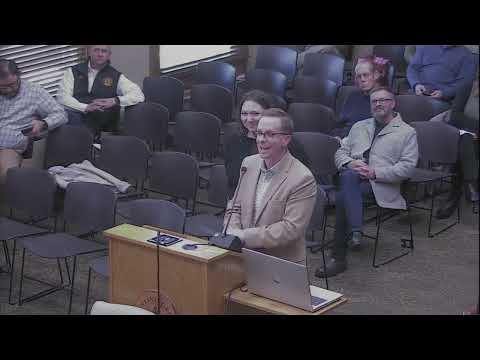
Bowling Green commissioners voted to join the Karst Groundwater/Storm tracing, observation, risk monitoring and modeling program with Warren County and Western Kentucky University’s Center for Human GeoEnvironmental Studies on March 17.
Public works staff said the city has collaborated with WKU for about 15 years on groundwater monitoring in the Lost River Basin and that expanding the program with county participation will increase the monitoring footprint and improve modeling of how rainfall becomes groundwater response. The first‑year cost to the city if the county joins was described in the meeting as roughly $103,000 with subsequent years projected in the low $90,000 range.
Why it matters: staff and commissioners emphasized that karst geology does not respect political boundaries and that expanded monitoring will inform development standards, neighborhood planning and future engineering to mitigate flooding risks as the city grows. Commissioners referenced recent severe storms and localized flooding as rationale to invest in forward‑looking groundwater science.
Implementation: the agreement (municipal order 2026‑58) was described as adding Warren County as a financial and technical partner; city geologists and stormwater staff will work with WKU researchers on expanded monitoring sites, rain gauges and water‑quality sampling and will use findings to guide development standards in sensitive areas.
Quotes: "We're going to be able to expand our footprint and look across whole watersheds at a time," said a staff scientist describing the partnership. "We want the raw product that we're supplying to BGMU…to be the highest quality that it can be," the city manager added.
Next steps: commissioners approved the agreement and staff will complete the intergovernmental documentation and begin expanded deployment of monitoring equipment.