Get Full Government Meeting Transcripts, Videos, & Alerts Forever!
Get email alerts on the Land Use Trees topic
No spam. Unsubscribe anytime.
Council denies appeals, affirms approval for removal of 39 trees in Hawk Creek subdivision
Summary
After a lengthy public hearing over drainage, noise and road‑width concerns, the Biloxi City Council voted 4–3 to deny appeals and affirm the planning commission’s approval to remove 39 trees for the Hawk Creek subdivision; the developer pledged to plant 79 replacement protected trees.
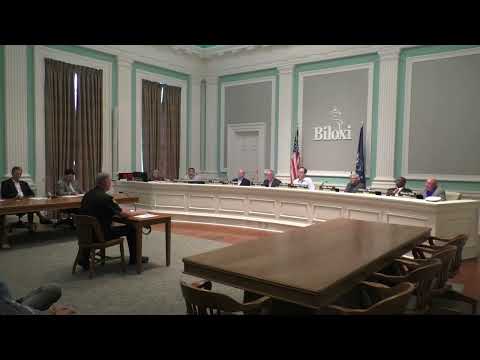
Biloxi’s city council on Monday denied an appeal and affirmed the planning commission’s decision to allow the removal of 39 trees — 35 of them designated protected — on Lot 23 of the Hawk Creek subdivision. The motion to deny the appeal was moved by Mr. Tisdale and seconded by Mr. Shoemaker; the council announced the motion carried on a 4–3 vote.
The dispute centered on whether the developer had shown good cause to remove trees that residents say buffer their neighborhood from interstate noise and stormwater impacts. Director Creel summarized the application history, saying the developer revised and resubmitted plans and that the removal is tied to necessary grading and infrastructure work: “They’re proposing to remove 39 trees, of which 35 are protected trees,” he told the council.
Appellants argued the council should delay the project until roads, drainage and sidewalks in Eagle Point are rebuilt. Christopher Short, an appellant from Eagle Point, said residents face recurring flooding and narrow streets and asked that the city “table it till we fix the problems” so new phases do not simply shift the burden to neighbors.
The developer, Meritage Homes, and its consultants said the removals are needed to meet modern stormwater and road standards and that the plan includes more extensive mitigation than earlier alternatives. Jordan Burch of Meritage said the company altered the road alignment to save an ‘‘anchor’’ tree and expanded the planting plan: “We diverted that road to save that tree,” Burch said, and the mitigation includes more than 70 new protected trees intended to buffer future residents from the interstate.
Engineering testimony emphasized that modern subdivisions in Biloxi must meet a zero‑increase runoff standard and that some cut-and-fill grading— which can affect tree viability — is required to accomplish detention and drainage that prevents post‑development runoff from exceeding pre‑development conditions.
Council members who supported denying the appeal said the application had been vetted multiple times by the tree committee and planning commission, and that staff and consultants found the developer’s mitigation credible. Opponents pointed to immediate harms — noise, perceived loss of mature canopy, and known flood points — that they said would take decades to remedy with newly planted saplings.
With the council’s decision, the developer can proceed to submit infrastructure and construction plans to the city’s engineering department. Final plat approval — and any required inspection and acceptance of installed infrastructure by the city — will precede recording of the subdivision. The council’s denial of the appeal affirms the planning commission’s earlier approval; the council did not record roll‑call votes for each member in the hearing transcript.
Next steps: the developer must complete the engineered infrastructure, after which the city will verify compliance before issuing final approvals. Residents and council members noted they will continue to press for improvements to drainage and road safety as construction advances.