Get Full Government Meeting Transcripts, Videos, & Alerts Forever!
Get email alerts on the Homeless Services topic
No spam. Unsubscribe anytime.
AFSCME members and service providers urge commissioners to protect frontline homeless‑services jobs
Summary
Several AFSCME representatives, case managers and program staff told the board that layoffs and program cuts across homeless services and behavioral health threaten clients and degrade local capacity; they urged preserving direct‑service positions and stronger coordination with city partners.
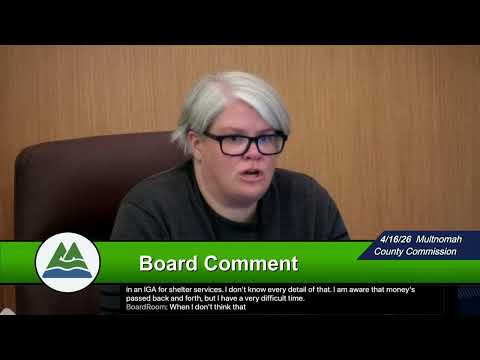
A coalition of county direct‑service workers and union representatives used the public‑comment period to press commissioners to protect frontline staff and programs in the face of the FY2027 proposal.
Misha Litvak, president of AFSCME Local 1790 and a case manager at Sunstone Way, said fractures between the city and county funding have already led to mass layoffs and program closures that displace vulnerable people and reduce service capacity. "The workers of AFSCME Local 1790 and all those we serve are counting on our local leaders to do what's right and support these critical direct services and the staff who carry them out," Litvak said.
Rachel Araujo, vice president of Local 88 and an acute care coordinator, described daily calls from people in crisis and said layoffs threaten life‑saving services; she asked the board to "freeze administrative bloat" and prioritize frontline workers over consultants.
Lunette Wimberly and Xavier Entity described the on‑the‑ground importance of culturally competent case managers and navigation specialists, with Wimberly noting many staff have lived experience of homelessness and bring critical relationships and de‑escalation skills. Gus Croll warned that cuts to services risk destabilizing partner providers and the shelter network.
Speakers linked their testimony to the Chair's presentation, noting the Chair's plan to close some shelter beds and redirect funding toward transitions and housing. They asked commissioners to use the budget process to protect direct services, maintain behavioral‑health shelter capacity, and coordinate regionally with the City of Portland and HomeForward to prevent gaps in intake and placements.
Commissioners responded in the subsequent discussion by asking for more information about the impacts on equity priority communities, the engagement process with frontline staff, and how leveraged state or federal funds would be preserved; no formal staffing decisions were made at the meeting.