Get Full Government Meeting Transcripts, Videos, & Alerts Forever!
Get email alerts on the Probation Services topic
No spam. Unsubscribe anytime.
Pine County probation director highlights reduced juvenile placements, restorative‑justice gains and millions saved by electronic monitoring
Summary
Probation Director Terry Faucet told the board that juvenile placements have fallen, restorative programs show low recidivism, and recent use of electronic monitoring saved the county roughly $195,000 last year (about $2.2 million saved since 2009); the report also flagged fee‑revenue risks from proposed legislation.
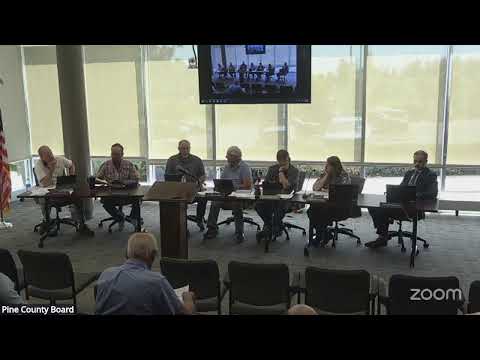
Terry Faucet, Pine County Probation Director, presented an outcomes report to the board outlining program performance, savings and operational priorities.
Faucet highlighted several program successes: restorative justice (the C5 program) has handled 148 delinquency cases since 2016 with low recidivism; pre‑charge diversion and truancy diversion efforts (YETI and Building Bridges) returned students to school and kept many youths out of formal court; and electronic monitoring used as a detention alternative produced an estimated $195,000 in placement savings last year, and roughly $2.2 million in savings since 2009, according to the materials Faucet provided.
Program metrics Faucet cited included 388 probation placements reported by the Department of Corrections dataset he used for funding‑eligible counts, 49 new juvenile cases in the year and a mix of misdemeanor and gross‑misdemeanor adult cases. He also reported $31,000 collected in local corrections fees last year and warned that pending legislation to eliminate program and corrections fees would reduce revenue streams that currently pay for some programming and monitoring.
Faucet described a range of evidence‑based programming (decision‑making skills, DWI intensive supervision, domestic violence intervention, and targeted cognitive‑behavioral programs) and noted high completion rates in some targeted programs; for example, the county’s first‑time DWI program reported strong success and reduced reoffending rates in one‑year follow‑ups across recent cohorts.
Why it matters: The probation office’s approach — emphasizing diversion, evidence‑based interventions and alternatives to out‑of‑home placement — has both fiscal and social implications: reduced placement days lowers immediate costs and helps keep juveniles in community and school settings.
Next steps: Faucet and Department of Corrections partners will present a joint comprehensive plan update later in the summer; commissioners flagged fee‑loss scenarios as a budgetary issue to resolve in upcoming budget work.
Attribution: The report and direct quotes come from Terry Faucet’s presentation to the board. Numerical program details and savings figures were read from the probation materials provided to commissioners.