Get Full Government Meeting Transcripts, Videos, & Alerts Forever!
Get email alerts on the Social Services Eligibility topic
No spam. Unsubscribe anytime.
Dolores County officials warn state eligibility 'district' plan could disrupt local services
Summary
At a Dec. 8 budget workshop, county directors and commissioners raised questions about a state plan to move eligibility services into 11 districts managed by regional hubs, citing uncertainty about funding allocations, hiring, liability and potential workforce reductions in small counties.
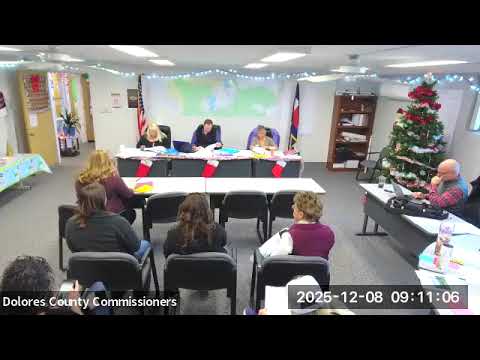
Dolores County commissioners and local social-services directors spent much of the Dec. 8 budget workshop focused on a state proposal to reorganize eligibility services into regional “districts” with designated hub counties. Directors said the state plans to reallocate administration dollars and centralize several functions — new eligibility software, statewide call centers and centralized document scanning — under district hubs, but many operational and funding details remain unspecified.
County directors told the board that the state’s map divides the region into 11 districts and, as drafted, assigns hub counties using timeliness and staffing measures. Under the proposed model, district hubs would receive and control funding for eligibility programs and would hire or contract staff who would serve residents across multiple counties. Directors said the state is seeking bids and RFPs on tight timelines and has linked the reorganization to the state budget, creating pressure to proceed despite unresolved questions about compensation, benefits, HR authority and liability across county lines.
Board members and directors raised several practical concerns: who would employ and discipline staff assigned to satellite offices, whether hub counties would be required to absorb HR and liability for employees who primarily serve other counties, how benefits and pension coverage would be handled, and whether smaller counties would see net reductions in in‑county staffing. Directors described scenarios in which hub counties would hire and retain employees while surrounding counties might be asked to provide office space or temporary supervision — arrangements that could require counties to contribute portions of local funds to support hub staffing.
Several directors said the state has indicated it will require at least one person available in each county office for walk‑ins while centralizing back‑office functions at hubs. They also reported the state intends to move away from the counties’ current eligibility software and to operate a new statewide system. Directors warned the uncertainty about how funds will be allocated to districts and about the expected level of compensation or cost‑sharing creates implementation risk and could produce workforce reductions in smaller counties unless allocations are sufficient.
The directors’ association has asked the state to redraw district boundaries and to allow districts to nominate or select their own hub rather than having hubs pre‑assigned by state criteria. Commissioners agreed to press the Colorado Counties, Inc. association and to request clearer financial terms and timelines from the state; staff said some counties have been told the state may seek hub proposals on an aggressive schedule and that third‑party contractors could be used if counties do not bid.
The board did not take formal action at the workshop. Commissioners asked staff to continue pursuing clarifications from the state and to prepare follow‑up briefings and options for the board once more financial and legal details — including RFP deadlines and projected district allocations — are available.