Get Full Government Meeting Transcripts, Videos, & Alerts Forever!
Get email alerts on the Medicaid Dss topic
No spam. Unsubscribe anytime.
DSS staff detail Medicaid expansion, program complexity and staffing pressures in Burke County
Summary
Burke County Department of Social Services presented an in‑depth Medicaid briefing: North Carolina expansion added roughly 6,000 local enrollees, programs range from family/children’s services to long‑term care and PACE, and staff emphasized application complexity and recurring staffing needs.
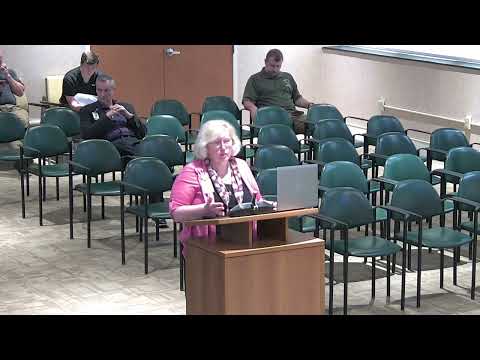
Department of Social Services officials provided commissioners an extended “deep dive” on Medicaid policy, eligibility, and local program impacts at the June 2 pre‑agenda meeting.
Amanda Grady and Tammy, Medicaid program manager, told the board that Medicaid is a jointly funded federal‑state entitlement administered by the state with local casework. "In Burke County, we have a little over 6,000 people on expanded Medicaid," Tammy said, describing the December 2023 Medicaid expansion in North Carolina that added approximately 600,000 newly eligible adults statewide.
The presentation explained mandatory federal benefits and a menu of optional state benefits, and walked commissioners through major coverage buckets (family and children’s Medicaid, adult Medicaid, long‑term care, CAP programs and PACE). Officials emphasized the program’s procedural complexity: eligibility requires income, household composition, residency, and identification checks, and many applications require detailed documentation and time‑consuming eligibility determinations.
Staff noted multiple application channels—online, in person, mail, fax, phone and through the federal marketplace—and stressed the limits of central software: state systems were designed to help screen eligibility but still rely on experienced caseworkers to apply policy judgments. "There is not really a single automated 'push‑button' determiner; the caseworker has to have a lot of policy knowledge," presenters said.
Funding and local impacts: presenters described differing reimbursement rates for positions (for example, a Medicaid worker position may carry a higher reimbursement percentage than other programs) and explained that state one‑time staffing dollars had helped but do not cover recurring needs. County manager later illustrated this point: the state provided a one‑time $350,000 allocation to cover additional staffing for expansion but the county must cover ongoing staffing costs thereafter.
Long‑term care and special programs: presenters explained that long‑term care eligibility is complex and can take months to determine; CAP (Community Alternatives Program) and PACE (Program of All‑Inclusive Care for the Elderly) provide home‑and‑community‑based alternatives to institutionalization for qualifying individuals.
Commissioners pressed staff on whether state and federal changes create unfunded mandates at the local level. Staff and the manager acknowledged one‑time state funds for expansion are helpful but recurring staffing to handle sustained application volume remains a county expense.
Where it goes next: the board accepted the DSS report 5–0. Staff said they will continue recruiting and training eligibility staff and coordinating with state resources to manage caseloads and program administration.
Quote: "Medicaid is health insurance for folks who um have low income um or cannot afford their health care cost," Amanda said. "There is not really a single automated 'push‑button' determiner; the caseworker has to have a lot of policy knowledge," staff added.