Get Full Government Meeting Transcripts, Videos, & Alerts Forever!
Get email alerts on the Municipal Budget topic
No spam. Unsubscribe anytime.
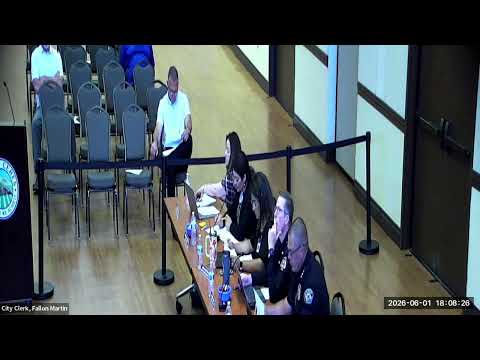
Ceres council directs cuts to reach balanced FY2027 budget, spares police academy hires and core IT staff
Summary
At a June 1 special meeting the Ceres City Council directed staff to produce a balanced FY2027 budget (Option C) by trimming parks contracts, community-event supplies, and several recreation and code-enforcement positions while leaving police academy hires and IT staffing intact. Staff will return with the finalized budget for adoption on June 8.
Finance Director Vanessa Portillo told the Ceres City Council the city's status-quo general fund showed a roughly $5.6 million shortfall and that staff had already identified about $3.2 million in savings, leaving a recommended gap near $2.16 million.
"I'm Vanessa Portillo, finance director, and tonight we will review the balancing—" Portillo said as she outlined the budget process and the three options staff was asked to present: the manager's recommendation (Option A), a limited-reserve approach (Option B), and a fully balanced budget (Option C).
Interim City Manager Steve Williams then detailed roughly two dozen line items (numbered 99 through 121) by which staff could close the remaining gap, including reduced contractor payments, one-time revenue assumptions and a set of proposed service and staffing reductions. Williams summarized the effects of the package: with the proposed cuts the city could present a balanced Option C to the council for adoption.
Key proposed reductions the council discussed include cancelling the Alpine Security contract (estimated $64,000 general-fund savings), halving or eliminating a capital-advocacy contract (general-fund impact ~$21,000 of a $72,000 total), ending the council member donation program ($25,000), terminating the BrightView right-of-way landscaping contract ($266,000), and cutting supplies for seasonal events (two items at about $8,000 each). Staff also described personnel options: suspending repayment on an internal equipment loan for one year, pausing certain transfers to locally maintained facilities, eliminating two part-time public-works code-enforcement positions funded by expiring ARPA grants (about $33,000 each), and recommending layoffs or reduced hours for several recreation positions and one parks maintenance post.
Williams outlined trade-offs for each reduction and warned of potential service impacts, such as restrooms remaining unlocked at night if Alpine Security is cut or longer response times for IT outages if the city outsources technology services.
Several council members voiced concern about program impacts but indicated fiscal necessity. Council Member Otto urged follow-up work to build a longer-term strategic plan and said the council should consider a deeper financial audit. Council Member Vieira stressed preserving core services and asked staff to present precise impacts on hours and programming before final adoption.
Public comment was brief; resident John Warren urged the council to choose the balanced option, saying the city should aim to start the fiscal year with a zero-deficit budget.
After line-by-line discussion, council members reached consensus direction to implement the cuts represented by items 108 through 117 and to retain items 118, 119, 120 (police academy hires) and 121 (do not pursue outsourcing IT at this time). Williams said staff would prepare Option C, the balanced budget, for formal consideration and adoption at the June 8 meeting. No formal vote on the budget was taken at the June 1 meeting.
The council then recessed into closed session on separate labor and real-property matters; staff said direction had been provided prior to adjournment.