Get Full Government Meeting Transcripts, Videos, & Alerts Forever!
Get email alerts on the Ems Services topic
No spam. Unsubscribe anytime.
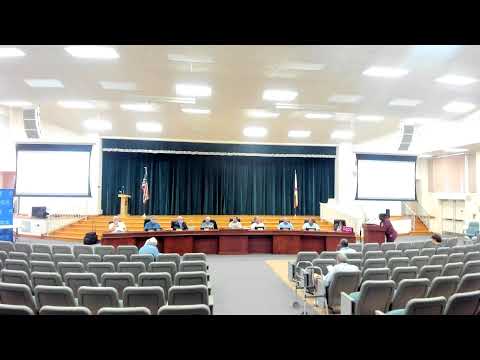
Commissioners press for EMS fixes as provider misses response standards; SAFER grant application approved
Summary
The board discussed ambulance coverage shortfalls, contract compliance issues and station placement, approved preparing a SAFER personnel grant application and asked staff for cost comparisons between expanding private-provider coverage and operating county ambulances.
Columbia County commissioners spent extended time on an EMS briefing that painted a picture of constrained coverage and response-time shortfalls under the county’s current private-provider arrangement. Staff reported the contracted provider was running five-and-a-half ambulances in the county, had not met key time standards and was at risk of fines beginning July 1 as the contract’s compliance timeline concludes.
What staff said: Staff described frequent 'level zero' events (periods with no ambulance available) and told the board they were tracking instances when calls went unassigned. The county is exploring options to improve coverage: (1) negotiate for added ambulances/units with the current contractor, (2) contract additional private ambulances, (3) acquire county‑owned ambulances and staff them, or (4) pursue federal personnel funding (a SAFER-style grant) to underwrite hires temporarily. Staff also discussed stationing strategies to improve northern coverage, including using a county-owned mobile home on Quinton Street adjacent to the jail.
Numbers discussed: Staff and commissioners cited operational math from the briefing: at five-and-a-half units the county would face roughly 2,700 calls per unit per year (far higher than comparable counties), while nine ambulances would be closer to industry norms and could reduce per-unit call volumes to the 1,200–1,500 range. Staff estimated annual billing revenue from transports of roughly $500,000–$600,000, which would offset some operating costs, and noted collection rates vary by payor mix.
Board action and next steps: The board voted to prepare and submit a federal staffing grant application (a SAFER-style award that can cover personnel costs in early years) and to proceed with staff work to: obtain cost comparisons for contracting additional ambulances versus purchasing and operating county ambulances; ask the hospital authority whether it can donate ambulances; and schedule a special meeting to finalize decisions prior to the public hearing and budget deadlines. Staff also will bring audited recovery/collection figures and modeled scenarios for 5.5 vs. 7.5 vs. nine ambulances.
Attribution and uncertainty: The briefing combined staff analysis and commissioner questions. Key operational numbers (calls per unit, billing estimates, fines schedule) came from county staff’s operations and finance reports and were presented to the board for follow-up verification.