Get Full Government Meeting Transcripts, Videos, & Alerts Forever!
Get email alerts on the Seasonal Communities topic
No spam. Unsubscribe anytime.
Planning board reviews zoning implications of 'seasonal communities' designation; sewer allocation and buildable-lot concerns raised
Summary
The Yarmouth Planning Board examined state-level seasonal communities rules and a planner memo on undersized lots, focusing on whether reduced frontage rules for 10,000 sq ft lots would create new buildable parcels, and discussed sewer allocation, Zone 2 well protections and timing tied to fall town meeting.
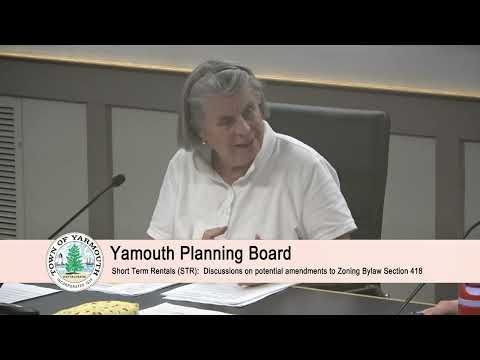
YARMOUTH, Mass. — At its June 3 meeting the Yarmouth Planning Board reviewed a planner memo on the zoning implications of a potential state "seasonal communities" designation, focusing on undersized-lot rules that could allow construction on lots down to 10,000 square feet with reduced setbacks.
Planner Kathy presented mapping and counts showing that although the raw parcel list contains a few hundred candidate lots, the number of truly buildable, vacant parcels that would become developable under the reduced-frontage rules is likely small. "I don't see this being a prevalent thing that's going to all of a sudden explode a bunch of additional building in our community," Kathy said, but she and board members repeatedly flagged sewer allocation and drinking‑water well (Zone 2) protections as critical constraints.
Key points: - Setbacks and buildability: The draft state rules for seasonal communities would allow smaller buildable lots (10,000 sq ft minimum in the memo), with setbacks of one foot per 1,000 sq ft up to 15 feet; the board noted many candidate parcels are constrained by wetlands or other site-specific limits. - Sewer allocation and bedroom counts: Members emphasized the need to track sewer allocation and bedroom allocations carefully to avoid overbuilding sewer capacity; in Zone 2 well-protection areas, septic and bedroom allowances remain tightly controlled. - Process and timing: The select board and town meeting will decide whether to accept the state designation; if approved at the fall town meeting, the town would have up to 24 months to adopt conforming zoning amendments. The planning board’s role is to recommend zoning text changes if the designation is accepted.
Why it matters: Conforming zoning changes tied to a seasonal-communities designation could enable limited new building opportunity in already-dense neighborhoods, and the board wants to ensure infrastructure (sewer) and environmental protections are factored into any zoning changes.
Next steps: The planning board will prepare a memo for the select board outlining recommended zoning parameters and will focus on sewer-allocation safeguards and clear definitions to prevent unintended buildout of constrained lots.