Get Full Government Meeting Transcripts, Videos, & Alerts Forever!
Get email alerts on the Summer Event Permits topic
No spam. Unsubscribe anytime.
Manhattan CB2 committee recommends dozens of summer street activations with conditions on lines, cleanup and public safety
Summary
After a long hearing, the Manhattan Community Board 2 committee recommended approval of many summer pop‑ups and activations — from retail sampling to plaza installations — while flagging applicants with past compliance concerns and imposing conditions including stronger line control, day‑of contacts, precinct notification and limits on advance social promotion.
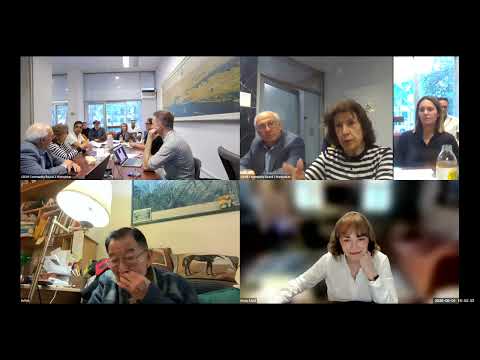
Manhattan Community Board 2’s Street Activities & Resiliency Committee reached recommendations on roughly 31 summer event applications after a long hearing that stretched into its business session.
Erica, the committee chair, guided the meeting through a string of in‑person and remote applicants — from a Unilever mobile activation in Gansevoort Plaza to retailers staging World Cup‑week activations, and to large public series proposed for the decommissioned Bowery subway station. For each application the committee focused on three consistent themes: managing lines so sidewalks and bike lanes remain clear, ensuring prompt and effective cleanup, and confirming coordination with NYPD and FDNY for safety and traffic flows.
Several applicants received conditional recommendations. Retail events (Steve Madden, JBL/Yankees activation, Prada, Steve/SoHo popups) were approved on the committee’s floor after applicants outlined stanchion plans, security staffing and limits on amplified outdoor sound. The committee recommended that mobile vendor/curb‑lane activations (Shopify, Daily Drills, Unilever Fresh Clubhouse) strictly maintain single‑file queueing, wristband or digital queuing systems where practical, and immediate day‑of contact numbers so organizers can be reached in real time.
For higher‑risk proposals, the committee required stricter conditions or additional outreach. Event producers with a history of problematic installations were placed on notice: committee members said future approvals may be withheld if promised mitigations fail. When a proposal would affect pickup/drop‑off or emergency access (for example, event staging that would approach bus stops or active fire lanes), the committee required proof of coordination with precinct and FDNY.
Committee members repeatedly urged applicants to avoid posting last‑minute social promotions that could trigger a large uncontrolled crowd. As one committee member put it during the business session, “If an activation is likely to draw a large crowd, use a digital wait‑list or ask SAPO for additional block coverage rather than let the line spill into the neighborhood.”
Votes taken in business session produced a set of approvals, denials and referrals that the committee will forward as recommendations to SAPO and, where required, to the full Community Board for final comment.