Get Full Government Meeting Transcripts, Videos, & Alerts Forever!
Get email alerts on the Procurement topic
No spam. Unsubscribe anytime.
Council questions contractor termination clause and performance terms in proposed long-term solid-waste contract
Summary
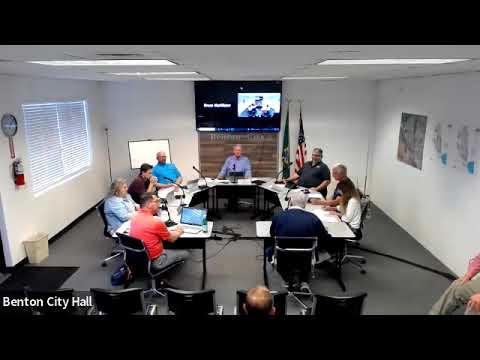
Councilors spent substantial time questioning a proposed long-term solid-waste contract presented by company representatives (Jeff Thompson and Eric). Major concerns included a clause allowing contractor termination if a requested rate adjustment is not approved within four months, high monetary thresholds for performance remedies, nonprofit discount treatment, and recycling/organics implementation costs under emerging state rules.
Representatives from the prospective solid-waste contractor, including Jeff Thompson and Eric, presented the proposed contract and explained the rate-setting approach: a base true cost-of-service rate plus annual CPI adjustments, pass-throughs for disposal/tipping and fuel, and recycling commodity credits or debits. The contractor emphasized regulatory oversight from the Washington Utilities and Transportation Commission and said adjustments would be presented to the city with supporting documentation.
Council members pressed the contractor on several contract provisions. The most contentious was a clause that allows the contractor to terminate the agreement if the city fails to consent to a requested rate adjustment within four months; the contractor can then give four-to-eight months’ notice and exit the contract. Councilors described this as a significant risk for a small city, noting the asymmetry between a long-term city commitment (15 years of depreciation language in the contract) and a short contractor termination remedy. The contractor said termination was an unlikely “nuclear option” and that their practice is to work cooperatively, but agreed to take the council’s concerns back to the company for possible revision.
Other substantive questions included performance fees and remedies (fines for missed collections appear limited and the contract’s threshold for termination or more serious remedies—performance fees exceeding $25,000 per month for three consecutive months—would be very difficult for a small city to reach), whether the contract can include a 50% discount for qualified 501(c)(3) nonprofit customers (the contractor said discounts would shift costs to other ratepayers and the city would need to define eligible entities), and how upcoming state requirements for mandatory curbside recycling and producer payment schemes could affect costs and contract terms. The contractor agreed to investigate the nonprofit discount option, review the termination timeline, and return with proposed language. Council also asked for clarification of indemnity language and whether performance remedies are meaningful for a small jurisdiction.
Council did not vote on the contract but signaled interest in getting vendor responses to specific redlines and clarifications before bringing a contract back for formal approval.