Get Full Government Meeting Transcripts, Videos, & Alerts Forever!
Get email alerts on the Land Use Signage topic
No spam. Unsubscribe anytime.
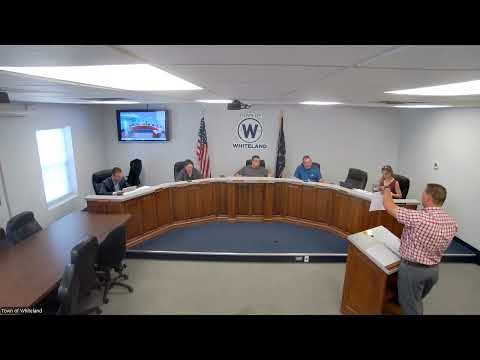
Whiteland Town board denies variance allowing apartment entry sign at Gateway corner
Summary
The Whiteland Town board voted 3–0 to deny a variance request from Denton Floyd Real Estate Group to place an entry sign for the UR apartments at Innovation Drive and Whitland Road, adopting staff findings that the sign placement did not meet town ordinance and could set an unwanted precedent.
The Whiteland Town board voted 3–0 to deny a variance request that would have allowed an entry sign for the UR apartment complex to be placed at the corner of Innovation Drive and Whitland Road rather than at the development's designated entrance.
Staff presented the case for denial, citing the town's sign ordinance and the seven statutory variance criteria in Ordinance 31.36. The staff report said the proposed monument sign sits within a 50-foot maintenance easement and that allowing the sign at the Gateway subdivision corner could create precedent and potential congestion if future tenants seek the same exception. "The staff recommends disapproval of the petition based on the above findings of facts," the staff member said in the presentation.
Petitioner Jared Tally of Denton Floyd Real Estate Group defended the placement as a visibility and wayfinding need for new residents, saying the complex's primary entrance is inset from Whitland Road and that the installed masonry base reflected the position shown on their construction drawings. "We weren't trying to circumvent the ordinance," Tally said, adding that the request was "more or less a marketing request" to improve visibility for prospective tenants.
A project civil engineer said the team expected sign-location review during earlier site-plan review and that some of the sign documentation and photos arrived late in the staff packet, which complicated preparation. Town staff replied that civil approvals typically cover grading and utilities and that architectural and signage details are often submitted later in the process.
The staff report reviewed the town's signage standards: two entry signs are permitted at each entrance of a residential subdivision or multifamily development, a sign itself may not exceed 6 feet in height, and a minimum 10-foot setback from public right-of-way is required. Staff also noted the developer for the subdivision (Patch Development) could place a gateway sign at the subdivision entrance, reducing the justification for an individual lot owner's entry sign within the maintenance easement.
After questions from board members about relocation options, setbacks and future precedent, a motion was made to deny case 2026 BO2 and adopt the staff findings and facts; the motion was seconded and recorded as passing 3'to'00. The oral roll call included a brief unclear exchange during voice votes, but the final tally was entered as three votes in favor of denying the variance.
The board adjourned after completing the vote. The petitioner's contractor, Forge Construction, had paused site work on the sign base after staff identified that the proposed placement lacked the required permit; no further action on the sign placement was recorded at the meeting.