Get Full Government Meeting Transcripts, Videos, & Alerts Forever!
Get email alerts on the Permits And Procedure topic
No spam. Unsubscribe anytime.
Planning commission gets refresher on permit types, Brown Act duties and parking-study options
Summary
City staff reviewed permit categories (administrative and discretionary), 2025 permit activity, Brown Act obligations and public-comment rules; commissioners pressed staff about the parking study's availability and website access, and an emailed question about the Amazon project was directed to the city council.
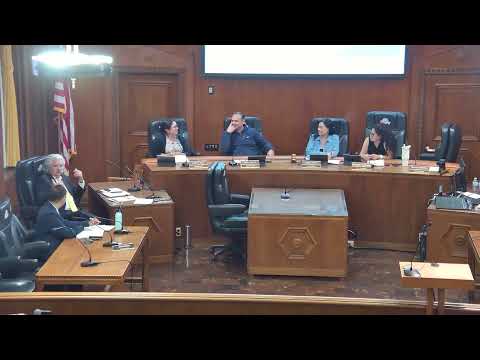
City staff gave the South Gate Planning Commission a workshop on June 2 outlining permit types in the zoning code, public-noticing steps and Brown Act requirements, and answered commissioners' questions about developer contacts, site visits and the city's parking study.
During the presentation staff reviewed Table 11.51-1 in the zoning code and explained three broad permit paths: administrative permits handled by the director (final unless appealed), discretionary permits A (planning commission as the deciding body for conditional use permits, variances and site-plan reviews), and discretionary permit categories in which the commission serves as a recommending body for items that go to city council such as density bonuses and zone changes. "The D stands for deciding body; his decision is final unless appealed," the presenter said when describing the table.
Staff also provided 2025 workload numbers: 154 accessory dwelling unit permits processed and a total of 158 building permits issued in 2025; staff said 56 housing units were completed in 2025, 51 of which were ADUs. The presenter explained that many issued permits are not completed because projects are delayed or abandoned, which accounts for the difference between permits issued and completed.
The presenter reviewed public-noticing procedures (mail notice to property owners/residents within 1,000 feet, newspaper notice 10 days before hearings) and the appeal timeline (10 working days to file an appeal of planning commission decisions to city council). Staff also gave a Brown Act reminder: meetings must be public, deliberations and votes must occur in public, and commissioners should disclose ex parte contacts or site visits rather than holding unscheduled discussions outside noticed meetings.
Commissioners asked whether they may accept renderings or other materials sent by applicants in advance; staff said commissioners may receive such materials but should avoid discussing them with other commissioners outside a public meeting and should consult staff (Gabriel and John) if in doubt. Staff recommended observing site visits but not advocating for projects during them and suggested subcommittees or noticed special meetings as ways to include the public and avoid Brown Act violations.
During the public-comment portion staff read an emailed inquiry from Mr. Dominguez asking whether distribution facilities are strong sources of general-fund revenue, whether manufacturing could return to South Gate and requesting an overview of an Amazon project and its benefits negotiated by the city. Staff said those contract and revenue questions are matters for the city council rather than the planning commission.
Commissioners also pressed staff about the parking study finalized a few years earlier and asked for clearer website access and a Spanish translation or guide for residents explaining how to start a preferential-parking block program. Staff said the municipal code already contains preferential-parking provisions and that staff would check the website to ensure the study and related materials are easier to find; staff also said they are working on a code amendment that could address driveway and front-yard paving rules referenced in the discussion.
The commission later voted to receive and file the workshop materials.
The presentation and the discussion underscored procedural limits on commissioners' communications with applicants and clarified how permit applications move from staff review to planning commission hearings and, where applicable, to the city council.