Get Full Government Meeting Transcripts, Videos, & Alerts Forever!
Get email alerts on the Professional Boundaries topic
No spam. Unsubscribe anytime.
School board adopts revised professional-boundaries policy after hours of debate over transportation and disclosure rules
Summary
The Fairbanks North Star Borough School Board adopted a revised policy on employee professional boundaries after an extended discussion about how the policy treats transportation, housing, pre-existing relationships and emergency situations. The measure passed in a roll-call vote during the June 2 meeting.
The Fairbanks North Star Borough School Board adopted an edited version of policy 4119.15, "Professional boundaries of employees with students," during its June 2 meeting following a lengthy board debate about how the policy treats transportation, housing and pre-existing relationships.
The board voted to approve the second-reading, amended policy after administration said Borough legal counsel had reviewed the changes and recommended moving many procedural details to accompanying administrative regulations. Miss Dillard, who presented the policy, said the revisions "define the policy's jurisdiction" by limiting it to interactions that occur "in the course of [an adult's] service with the district." She told the board the edits were intended to focus policy on appropriate versus inappropriate conduct while leaving operational steps to ARs.
Board members asked detailed questions about a section that had previously said an adult acting "solely in their capacity as district employees" would be treated differently. Several members, including Mr. Doran, worried that removing that phrase could require written permission for routine social activities (for example, a teacher giving a ride to a neighbor's child after a weekend event). Dr. Luke Miner said legal counsel favored the broader wording to close potential liability gaps and to avoid creating exceptions that could be misconstrued.
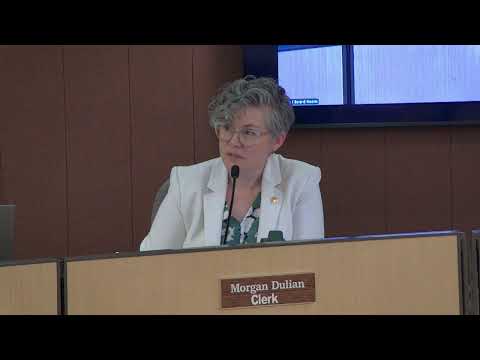
Miss Julian pressed both legal and administrative staff on clarifying when an activity is considered part of an employee's district service and when it is a private, social interaction. Miss Carol Hubard and other board members said the policy's opening paragraphs and the recommended administrative regulations should clarify common examples and permit parental authorization in ordinary social situations.
The policy also tightens language on disclosure of pre-existing outside relationships with students: the board replaced "discuss" with the more binding word "disclose," and Miss Dillard said the AR will specify how disclosures are made and recorded. The revised policy groups transportation and emergency housing language and adds guidance about prior authorization when possible and prompt reporting in emergencies.
After discussion the board moved and seconded adoption of the policy; Miss Poland called the roll. The motion carried by majority roll-call vote. According to the meeting record, Mr. Doran recorded a "no" vote in the roll call while other members voted "yes." The administration said the clean version of the policy adopted by the board moves many procedural details to ARs to allow the administration to respond more quickly to operational needs.
Board members said the approved policy is intended to protect students, provide clearer guidance for employees (including volunteers and independent contractors), and ensure prompt reporting and support in emergency situations. They also said the AR will be used to resolve routine, day-to-day questions (for example, when parental permission suffices for an occasional ride), while policy will set the district's broader expectations.
The board did not change district practice during the meeting; administrators said they will draft or update the accompanying administrative regulations over the summer and present them in the fall for implementation.