Get Full Government Meeting Transcripts, Videos, & Alerts Forever!
Get email alerts on the Community Redevelopment Agency topic
No spam. Unsubscribe anytime.
State Road 100 CRA board approves Kimley‑Horn evaluation after heated debate over past incentives and future use
Summary
The CRA board approved a trimmed Kimley‑Horn contract for a comprehensive performance and strategic evaluation of the State Road 100 CRA (contract ~$96,770). Public commenters and several council members argued the CRA underperformed and urged sunset or reform; others said the CRA remains a necessary economic‑development tool.
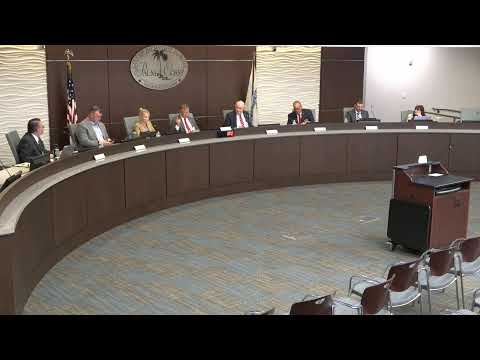
The Palm Coast State Road 100 Community Redevelopment Agency board voted June 2 to hire Kimley‑Horn for an independent performance and strategic evaluation of the CRA, approving a revised contract of approximately $96,770.
CRA staff told the board the district has not had a robust independent evaluation in many years and that projections in the original redevelopment plan were not met: taxable value growth through 2025 has fallen about $839 million — roughly 74% below original expectations, staff said. With the CRA scheduled to sunset in 2034, staff argued an updated market, revenue and performance analysis is essential to prioritize the remaining roughly $24 million of projected revenues and to identify realistic investments for the district’s remaining life.
The contract’s scope was reduced from an initial $140,000 proposal by removing items such as a finding of necessity evaluation and CRA expansion analysis, yielding the lower $96,770 figure staff recommended. Staff said the cost represented about 0.4% of the CRA’s projected remaining revenues and that the analysis should inform decisions over the next eight years.
The item prompted extended public comment and council debate. Several residents and at least one councilor urged sunsetting the CRA, criticized past use of CRA funds for residential incentives and impact‑fee credits (the transcript cites a “kickstart” program and $5,000 per apartment credits), and questioned transparency about where prior CRA receipts were spent. Other council members defended retaining the tool to help catalyze economic development — citing recent projects such as a proposed 36‑bed rehab facility and the Promenade commercial buildout — and warned that prematurely dissolving the CRA could forfeit future leverage for redevelopment.
Council and staff discussed outstanding CRA obligations, including a loan balance (identified in the meeting as roughly $2.49 million) and remaining kickstart credits. Staff noted proceeds from potential land sales (one 8.5‑acre parcel under marketing) could be applied to pay debt. After deliberation, the CRA board approved the Kimley‑Horn contract unanimously.
What’s next: Kimley‑Horn will perform the targeted evaluation, and staff expect to use the findings to guide investment strategy for the district through its 2034 sunset. The board and council signaled a continued appetite for oversight on how CRA incentives are used going forward.