Get Full Government Meeting Transcripts, Videos, & Alerts Forever!
Get email alerts on the Budget Engagement topic
No spam. Unsubscribe anytime.
Newport holds ‘Vision 2028’ town hall as council lays out high‑level budget and seeks resident priorities
Summary
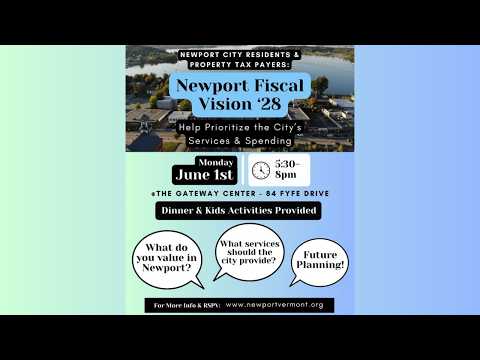
Newport City held a June 1 town‑hall budget session called Vision 2028 where councilors presented a high‑level FY28 spending overview and invited about 60 residents to prioritize services using a placard-and-dot exercise. Department heads will use the results to shape fall budget work.
Mayor Rickford Chase and Council President Carter Finnegan led a combined City Council meeting and a community town hall on June 1 to gather early public input on the city’s fiscal year 2028 priorities.
Finnegan framed the evening as an early, “90,000‑foot” conversation rather than a line‑by‑line budget review. He said the city’s finance task force has been at work since a cash‑flow crisis emerged after his election; the group previously moved to restructure short‑term debt to longer‑term financing in a special meeting the council approved. Finnegan said the goal of Vision 2028 is to move toward priority‑based budgeting so the city’s budget “reflects what we care about.”
Presenters gave residents a broad picture of the numbers: the group discussed total city spending in the ballpark of $9.3 million, with a general‑fund tax levy the city raises of roughly $5.7 million this year and an estimated $6.3 million to be raised for the next year. Public safety (the police department) was shown as the largest general‑fund expense at about $2.8 million; public works, recreation and general operations were shown as other major expense areas. Officials noted that some revenue is generated by enterprise activities (water, sewer, campground rentals and interlocal services), which reduce the amount that must be raised through property taxes.
Finance staff identified several reasons the city has seen deficits in recent years, including benefits and insurance costs in the police budget that were underbudgeted and some missed loan principal or interest payments that were not included in prior budgets. City staff said those items have been corrected in the March budget and will be tracked going forward.
After the presentation, participants worked in small groups at department‑labeled tables (recreation, administration, public works, water & sewer, fire, police, and economic development) to list services they expect from each area. Groups then transferred lists to newsprint and used colored sticker dots to indicate priorities: green for most important, yellow for essential, red for questions or efficiency concerns and a purple wild card for a single top pick.
Residents raised water‑quality concerns for the lake and watershed, urged attention to grant administration costs and asked the city to weigh fiscal restraint given local tax pressure compared with neighboring towns. “Water quality is a good place to start,” one attendee said during the group discussion.
Carter Finnegan said the task force and department heads will take the exercise outputs into account as they refine department budgets this summer and prepare for public hearings in the fall; the council expects to return to more detailed discussion in January. The city also plans to compile a memo summarizing the exercise results for council review and to give the incoming city manager clear community priorities.
The meeting closed after routine council business; the next regular council meeting was scheduled for June 15.