Get Full Government Meeting Transcripts, Videos, & Alerts Forever!
Get email alerts on the Student Engagement Teach Outs topic
No spam. Unsubscribe anytime.
Panel debates new rules to expand student and faculty access during accreditor site visits and to strengthen teach-out protections
Summary
Negotiators discussed a proposed provision requiring structured opportunities for students and faculty to give input during onsite accreditor reviews, debated randomized panels versus surveys, and reviewed draft language on teach-out plans and transcript access if institutions close.
Negotiated-rulemaking participants spent an extended block of time arguing over ways to increase meaningful student and faculty input during accreditor site visits and to strengthen protections if an institution closes.
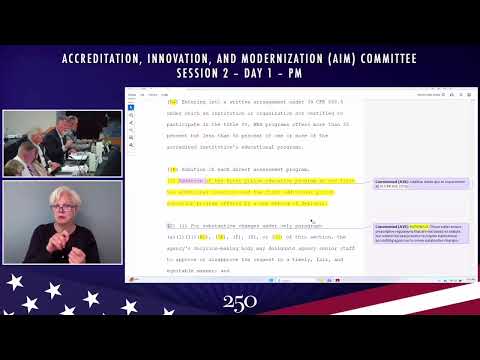
Beth Daggett, a Department staff member, said proposed paragraph L would require accreditors to provide "structured" opportunities during onsite evaluations to hear from students, faculty and other concerned parties. Jacob Lallo and Magnus Noble argued the change is intended to reduce institutions’ ability to control who speaks to evaluators. Lallo said permitting randomized panels or agency-conducted surveys would prevent institutions from selecting only favorable participants.
Michale McComis and other accreditor representatives urged trimming the language and noted many agencies already have complaint processes, student surveys and robust site-visit practices. "Agencies typically do student surveys, but those may be anonymous," McComis said; he warned that adding procedural requirements could be duplicative if not carefully targeted. Rebecca Busacca, with experience conducting site visits, said evaluators already can and do speak with students, review financials and expand inquiries when problems surface, and she cautioned against provisions that would add onerous administrative requirements.
On closures, Jeff Andrade said the draft adds a requirement for institutions to document a plan to maintain and provide access to transcripts in the event of closure. Magnus Noble pressed for ensuring teach-out institutions have the capacity to deliver comparable programs rather than minimal arrangements that leave students worse off. Department staff said they will revisit the text to reflect negotiators’ concerns and to clarify where complaint and monitoring processes already protect students.
Negotiators left the discussion without a final text but signaled willingness to consider alternatives such as agency-run surveys, clearer language around randomized selection, and stronger teach-out-capacity requirements in later drafts.