Get Full Government Meeting Transcripts, Videos, & Alerts Forever!
Get email alerts on the Waste Management topic
No spam. Unsubscribe anytime.
Scott County Waste Commission lays out landfill, recycling and gas‑to‑energy operations to Bettendorf council
Summary
The Scott County Waste Commission presented its funding model, diversion programs and a new gas‑to‑energy plant that injects cleaned landfill methane into the Mid‑American pipeline and supports roughly 4,000–5,000 homes annually.
Bryce Stalco, executive director of the Scott County Waste Commission, told the Bettendorf Committee of the Whole that the commission is fully funded by user fees and operates several regional facilities serving residents and small businesses.
Stalco said the commission, formed in 1972 and governed by representatives from Scott County and member cities, funds about 70 staff and its programs through tipping fees and the sale of recyclable materials. “We are something unique about our entity is we are fully funded by user fees. So we receive no tax dollars at our facilities whatsoever,” he said.
The commission manages the Scott area landfill, which Stalco described as a community utility that currently serves roughly 70,000 customer visits a year and has a master plan projecting a park conversion at the end of its life. Stalco said the facility’s life is projected through 2070 but that the commission continually pursues operational changes, compaction strategies and diversion programs to extend capacity.
Stalco highlighted a new gas‑to‑energy system (the “Waga Box”), installed last November, that captures landfill methane, cleans it and injects the gas into the Mid‑American pipeline. “We capture that natural gas as waste breaks down. We clean it and we inject it back into our Mid‑American pipeline,” he said, and estimated it “fuels about four to 5,000 homes every single year.” He added the commission previously flared methane to meet EPA requirements but can now use a portion of the gas productively.
On recycling, Stalco described investments in optical sortation, AI and robotics at the processing facility and said the commission handles about 36,000 tons of recyclables per year, serving roughly 25 counties. He told council the commission is “about to hit our 1 billionth pound recycled since 1995” and contrasted local processing fees favorably with private providers elsewhere.
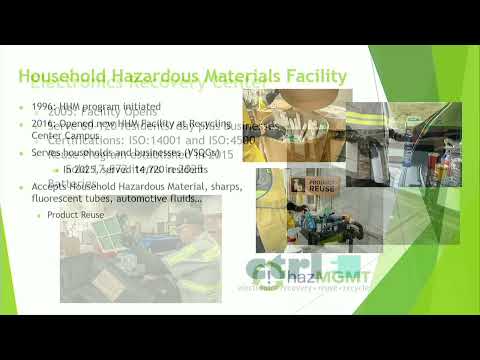
Stalco also reviewed the household hazardous material and electronics recovery facilities: the hazardous facility (opened 1996) offers free resident drop‑off and served about 15,000 residents last year; the electronics facility (opened 2005) processes 2–3 million pounds annually and has shifted toward refurbishment and resale, generating about $1 million in eBay sales last year and hosting a partnership bringing John Deere electronics to the site.
Councilmembers asked about charging residents who do not separate recycling; Stalco said Iowa law prevents bans on loads and that the commission has a “ban on bans” policy for accepting waste while offering drop‑off and recycling options at its sites. He offered to follow up on Bettendorf city‑specific fee structures.
Why it matters: The presentation clarified how the commission pays for diversion work without tax dollars, how recent technology investments and the gas‑to‑energy plant reduce waste and create revenue, and how those regional services interact with Bettendorf’s own waste policies.
The committee received the presentation and agreed to consider related consent items on the next council agenda.