Get Full Government Meeting Transcripts, Videos, & Alerts Forever!
Get email alerts on the Local Government topic
No spam. Unsubscribe anytime.
Wesley Chapel candidates stress managing growth, funding roads and fixing a high‑hazard dam
Summary
At a village candidate forum, Mayor Amanda Fuller and three council candidates debated how to manage rapid growth, fund road and dam repairs, and reduce flood risk; speakers emphasized matching county projects, seeking grants, and using regional cooperation to protect the village's low‑density character.
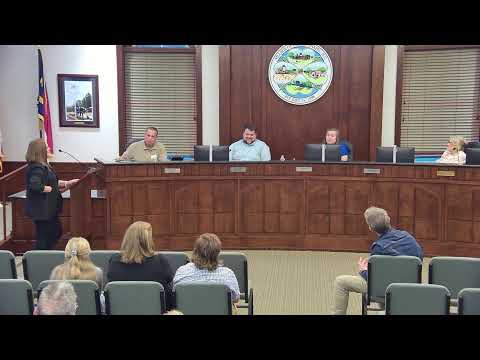
Four candidates and Mayor Amanda Fuller used a community forum in Wesley Chapel to outline competing approaches to rapid population growth, infrastructure funding and flood mitigation.
The forum opened with Joel Down, chair of the Events and Programs Committee, and was moderated by Brett Jensen of WBT radio. Candidates repeated a common theme: growth has arrived quickly and the village must balance services, roads and schools as it expands.
"I believe so. Because when you have swarms of people coming in, you don't have the housing," Deb Loe said when asked whether the roughly 1,000‑person increase since 2020 has come too fast. Loe raised school overcrowding and housing shortages as immediate concerns.
Jonathan Aliff said growth must be paced to allow infrastructure to keep up, urging the village to "have an opportunity to be able to catch up with our infrastructure and the resources we have," and pointing to traffic on the village's main corridor.
Mayor Amanda Fuller described the village's fiscal approach as conservative, saying the council has started saving for road improvements and to address a "high hazard" dam. "We've done a great job at saving money," Fuller said, adding that the village seeks grants before raising taxes and aims to avoid "drastic" tax increases.
Candidate Mike Como said the village has applied for a grant to pay for most dam repairs but noted the village must proceed with state‑required work if outside funding does not materialize. "We're hoping to get that grant, but if we don't get the grant, we still have to do the work according to the state," he said, adding an estimate that the work could cost "upwards of a million dollars."
Candidates repeatedly returned to how the county factors into local infrastructure: members flagged county requests that municipalities contribute 20%–30% matching funds for county‑led projects but said county staff sometimes do not provide total project costs or timelines. "When we say 20% of what? They say, 'Well we don't know,'" a candidate said, describing the difficulty of budgeting for partial matches.
On flooding and stormwater, Loe attributed part of the problem to clear‑cutting and loss of trees and urged better stormwater standards and homeowner support. Fuller noted the village employs a stormwater engineer and a contracted forester to advise elected officials on technical matters.
When asked about state policy, Jensen raised a 2016 state supreme court ruling that left municipalities unable to charge development impact fees. Jonathan said he would not endorse a constitutional amendment without additional study and described local steps the village has taken to strengthen stormwater and conservation ordinances.
Candidates also debated traffic solutions such as roundabouts and "super streets," with some saying poorly designed combinations can fail and should be questioned before the village agrees to pay matching funds.
The forum closed with a community note about Dogwood Park and a Dogwood Grove honoring the village's 25th anniversary. Organizers encouraged residents to contact candidates by email, phone or in person at town events.
The forum did not include formal votes or motions; candidates asked residents to review priorities at the Oct. 13 council meeting and to contact them directly for follow‑up.