Get email alerts on the Healthcare topic
No spam. Unsubscribe anytime.
Eastham passes nonbinding resolution backing statewide "Medicare for All" bill
Summary
A petitioner-led nonbinding resolution supporting a Massachusetts 'Medicare for All' bill passed at town meeting; the petitioner described a 10% levy model and claimed municipal and employee savings, while residents and the Finance Committee sought more fiscal detail.
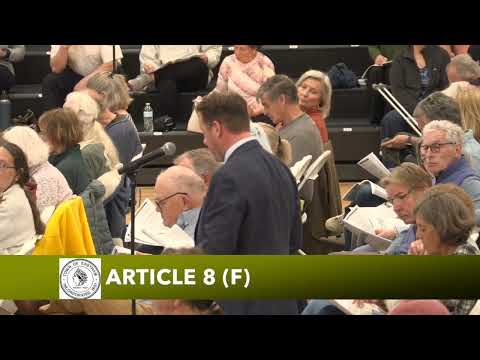
EASTHAM — Voters at a reconvened town meeting passed a petitioned nonbinding resolution signaling support for a statewide "Medicare for All" bill in Massachusetts.
Harry Gallagher, the petitioner, described a model in which a statewide health-care trust would cover residents, be financed in part by a 10% levy (with the first $20,000 of income exempted and retirement income excluded), and channel Medicare and Medicaid funds into the trust. Gallagher said the change would reduce overhead, pay providers differently and lower costs for most households. “This is why we’re here tonight,” Gallagher said, urging voters to send a message to their state legislators.
Supporters at the mic said the proposal would reduce denials, out‑of‑pocket costs and long‑term‑care expenses; several speakers emphasized benefits to seniors and workers. At the same time, members of the Finance Committee abstained from a recommendation, and multiple residents asked for more detailed fiscal analysis and raised concerns about provider acceptance and potential waits for services. Paula Asciutino, a former registered nurse, asked how many doctors would accept the payment model and warned of possible waits experienced in other countries. Sarah Clark asked specifically about the distributional effect on working households versus retirees.
The moderator called the question and the advisory resolution passed 298 in favor and 77 opposed. The vote is nonbinding: it is a town message to state lawmakers rather than a change in municipal policy or finance.
What’s next: The town clerk will record the advisory vote and forward the result to the state legislators named by the petitioner. Financial claims made at the meeting were not independently verified and will require follow‑up analysis if the Select Board or Finance Committee pursues municipal implications.
AI generated
The text on this page is AI generated. Summaries, highlights, analysis, and video transcripts are all produced from the original source material.
AI can make mistakes, so if you spot one, and we will fix it for everyone.
Note: the source content is unaltered by us. Any content source we link to, be it a video, an audio recording, or a document, is presented exactly as its publisher released it. That publisher is usually a government body, sometimes an individual official or another organisation.