Get Full Government Meeting Transcripts, Videos, & Alerts Forever!
Get email alerts on the Land Use Zoning topic
No spam. Unsubscribe anytime.
Neighbors and commission seek clearer easement language for proposed 550 Main Street buffer
Summary
The Monroe Planning & Zoning Commission continued a public hearing on ZCA 2026-2 (550 Main Street) after questions about a proposed 30‑foot green‑belt easement and driveway access easement; commissioners asked for draft legal wording addressing maintenance, pruning for utility lines, and setbacks. Hearing continued to July 16.
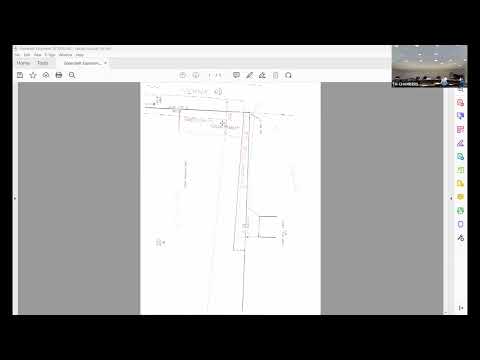
The Monroe Planning & Zoning Commission on June 4 continued its public hearing on ZCA 2026-2, a proposal affecting 550 Main Street that would create a 30‑foot green‑belt easement and an access easement for a neighboring driveway.
The applicant described the easement as a vegetated buffer intended to preserve existing brush, trees and screening between a future commercial area and adjacent residences. Commissioners pressed the applicant for precise draft language before any approval, saying the commission needs to know whether the easement would permit routine maintenance, invasive‑species control, or pruning around overhead utilities.
"The ultimate goal is to leave it alone and to prevent any new driveway openings going in there," the applicant said during the presentation, explaining the easement is intended to stop future driveway access through the buffer.
Planning and zoning administrator Kathleen Gallagher noted that the town typically requires proposed legal instruments to be submitted with approvals to avoid misinterpretation. Commissioners raised two central concerns: that a very strict easement could prevent future required beautification or appropriate plantings if the site is developed, and that large trees within 20 feet of town utility lines may need pruning or removal for safety.
Commissioner Ryan Condan suggested allowing tree maintenance for health and safety and permitting additional buffer plantings where appropriate. Commissioners also discussed an alternative land‑swap approach, which would change property lines and thus building setbacks; they said a land swap could in some cases better protect adjacent residential yards but acknowledged it can be difficult to implement without the adjacent owner’s consent.
Neighbors Tiffany and Chris of 11 Verna Road spoke in support of a buffer and asked for clear easement language. "To not have a driveway there," Tiffany said, summarizing the public’s primary goal. She and Chris also raised concerns about nighttime lighting if the lot is later developed as a commercial use.
Staff and the applicant agreed the hearing would stay open so the applicant can provide draft easement language for review; the commission set a continuation for July 16 and explained the applicant may request a statutory extension of the review period.
What happens next: the applicant is expected to submit proposed legal language for the easement and any clarifications on maintenance and utility‑line interaction before the commission takes final action. The public hearing remains open and the commission will revisit the item on July 16, 2026.